Booth Blog

Resilient Presidents

On a recent trip to Canada, I had the opportunity to visit Campobello, Franklin Roosevelt’s family “cottage” on an island just outside the US.  It was here that FDR contracted polio in 1921 at age 39.  I saw the room where he sat paralyzed for six weeks while multiple doctors tried to determine his condition and ultimately inform him of his prognosis.

Franklin Roosevelt was forever changed, causing him to re-evaluate every aspect of his life.  Part of his plan involved the purchase of a spa at Warm Springs Georgia in an attempt to overcome the paralysis. That he later became Governor of New York, and four term President of the United States is well known, and a testament to his resilience.

Peering into that room and trying to imagine his physical and emotional struggles, started me thinking about other presidents who overcame significant life challenges and setbacks to rise to the peak of power.

Franklin Pierce (1853-1857) lost all three of his children before he took the oath of office. One died in infancy, one from typhus, and the third in a train accident just days before his inauguration. His resilience was tempered by his noted alcoholism, ultimately taking his life due to cirrhosis of the liver just a few years after his term ended.

Abraham Lincoln (1861-1865), perennially voted our best president by historians, had many failures and losses in his life.  He lost jobs, nominations, and multiple elections in his career. He lost children, one in infancy, and one, Willie, in 1862 while in office. He also suffered periodic bouts of severe depression from time to time over much of his life. His ability to rise above these many blows and succeed in holding the Union together may be the ultimate in presidential resilience.

Ulysses S. Grant (1869-1877) served in remote army posts after his graduation from West Point. Influenced by his peers plus complete boredom and loneliness, he relied on alcohol to get by.   During his epic military campaigns in the Civil War, Grant was fastidious in avoiding alcohol. Later, as president, he would only drink short toasts.  Historians disagree whether he was truly an alcoholic or not, but his determined and mindful approach after 1861 is admirable.

Theodore Roosevelt (1901-1909) had severe asthma as a child leaving him weak and sickly.  His father took him on carriage rides in New York City at night to get some cool air into his lungs. Theodore worked hard to develop his body, adopting the strenuous life as his lifetime approach.

Theodore suffered the loss of his wife Alice in childbirth, and also lost his mother the same day. He gave the baby to his sister to raise while he moved west to the Dakotas to become a rancher and try to ease his mind from these losses.

Later, his aggressive approach to life led Roosevelt to boxing for sport even during his White House years. Unfortunately, he took a punch in the eye and lost his vision in that eye as a result.    Roosevelt’s resilient approach to life created a vigorous presidency.

After his presidency, Roosevelt travelled the unexplored ‘River of Doubt’ in Brazil, where he nearly died from an infected leg wound suffered while freeing a canoe stuck on rocks during the trip. Later, the river was named after him, the Rio Roosevelt.

John F. Kennedy (1961-1963) also was a sickly child. He contracted scarlett fever at age 3, had spinal surgery at age 30, and was diagnosed with Addison’s disease in 1947 while a Congressman from Massachusetts.  Today, his childhood maladies suggest he was intolerant of gluten, now known as celiac disease. Despite these illnesses, he showed courage, vigor, and possessed a ‘never give up’ attitude.

Gerald R. Ford Jr. (1974-1977) was born Leslie King in Omaha Nebraska. His mother moved him out of the house just 17 days later, due to his father’s abusive violence. Later, his mother re-married Gerald Ford Sr. and the future president took his name. This tough start in life didn’t hold him back, since he achieved the family stability he needed to thrive.

Ronald Reagan (1981-1989) also had a difficult childhood. His father was an alcoholic and the family moved frequently around the Midwest in search of work.  Reagan sometimes needed to pick his father up off the ground after a late-night binge and drag him inside the house. Some have suggested that Reagan’s personality was directly affected by these experiences, making it difficult for him to maintain close relationships, as he was known for having few if any close friends.  He made up for it with his sunny, optimistic personality that helped him win over voters.

As I have mentioned before, presidents are all too human. Their experiences lend new meaning to the Paulo Coelho phrase “the secret of life is to fall 7 times and get up 8”, meaning to choose never to give up hope and always strive for more.

Interested in learning more about the presidents? Visit the Carolyn & James Millar Presidential Gallery on the upper level of the Booth Western Art Museum. The gallery features original letters and photographs of every U.S. president. Learn more at www.boothmuseum.org.

2025-12-01T15:16:13-05:00Booth Blog|

Descendants of Presidents

Can you imagine growing up in the White House in the modern era? Your father is president of the United States, the most powerful person on Earth. Your mother is First Lady. You have Secret Service protection everywhere you go. Cameras record your every public word and action.

We know some of these children by their first names: Barron, Malia, Jenna, Chelsea, Amy. Presidents’ children weren’t always so closely watched, of course.

Our presidents have had 198 children in total, either biological, adopted, illegitimate, guardians, or allegedly with slaves. Some of those children also rose to great power; some were heroes; some died at very early ages. Only two presidents had no children: James Polk and the bachelor James Buchanan.

John Tyler, 10th president from 1841-1845, holds the record, fathering 16 children. Eight were with first wife, Letitia, and seven with second wife, Julia. Tyler was also alleged to have had one child with a slave. One of his grandsons, Harrison Ruffin Tyler, is still living, owing to Tyler’s marriage to a youthful Julia and his reproductive capacity at age 70.

Thomas Jefferson fathered 14 children, six with his only wife Martha, who died in 1782 when Jefferson was 39. He also fathered eight other children, allegedly with his slave Sally Hemings. William Henry Harrison had 11 children, 10 with his wife Anna Symmes Harrison and one allegedly with a slave, born in 1809.

Why did these early presidents have so many kids? Infant and child mortality was a key factor. Back then, death from typhoid, scarlet fever, diphtheria or accidents was common. Twenty-six presidential children died before the age of 5.

For those who survived childhood, a few turned out quite well in terms of making a national impact.

Two became presidents themselves: John Quincy Adams, son of John Adams, became president in 1825. George W. Bush, son of George H.W. Bush, was inaugurated in 2001. A grandson also became president when Benjamin Harrison, grandson of William Henry Harrison, was elected in 1889.

There were cabinet secretaries: Robert Lincoln was Secretary of War under Garfield, and James Garfield Jr. was Secretary of the Interior under Theodore Roosevelt.

Theodore Roosevelt Jr., won the Medal of Honor for his bravery on the beaches of Normandy on D-Day.

There have been ambassadors (John Eisenhower to Belgium, Robert Lincoln to Great Britain, and Caroline Kennedy to Japan), a governor (Jeb Bush in Florida), and a big city mayor (Charlie Taft in Cincinnati).

Historic lore also tells us a presidential child was the namesake for a popular candy bar. Grover Cleveland’s daughter Ruth, born in 1891 between his two non-consecutive presidencies, was wildly popular, leading the chocolate maker Curtiss Candy to name their candy bar Baby Ruth. However, that didn’t happen until 1921 long after both Grover and Ruth had passed away, thus leading some to believe Curtiss did so to avoid entanglements with baseball player Babe Ruth. Yet, the presidential connection persists.

A few children of presidents have died while their fathers were in office or were president-elect. Such tragedies became national stories and deeply affected their families. Willie Lincoln died of typhoid fever at age 11 in 1862 at the White House, bringing grief to Abraham and Mary Lincoln as they also managed the Civil War.

At age 11, Benjamin Pierce died tragically in a train wreck riding from Massachusetts to Washington, D.C. with his parents just a few days before Franklin Pierce’s inauguration. Franklin and Jane Pierce unfortunately were eyewitnesses to his gruesome demise. That event, plus losing their two other children earlier to disease, led Jane to become a recluse in the White House and Franklin to drink heavily.

It’s fair to say being a child of the president is a mixed blessing. While some have leaned into their legacy, most have remained relatively anonymous. That said, commencing in 2018 there is an annual meeting of the Society of Presidential Descendants where they can swap stories and share insights on their unique life experiences.

Interested in learning more about the presidents? Visit the Carolyn & James Millar Presidential Gallery on the upper level of the Booth Western Art Museum. The gallery features original letters and photographs of every U.S. president. Learn more at www.boothmuseum.org.

2025-11-17T15:50:41-05:00Booth Blog|

Presidential Humor

Whether telling a good joke, making a wry comment, or revealing a self-deprecating observation, Presidents can enhance their interactions with many of their constituencies with humor.

Some might say that a President’s ability to find humor in the maelstrom of daily life in one of the most taxing jobs in the world would be a great gift to possess.

Back in the 18th and 19th centuries, the correspondence of the presidents was the most likely source of such humor.  In the most recent 125 years of our history, however, the media and related publicity organizations have been the vehicle to push presidential humor out much further than ever.  The advent of radio, television, and the internet has provided an up close and personal look at presidential humor.

Starting in 1924, the annual White House Correspondent’s Dinner became one of the predictable venues for presidents to entertain, particularly after 1983 when the format turned to a comedy roast of the president and their administrations. Nearly every president since Calvin Coolidge attended at least one of these dinners.

Let’s revisit some of the funny and wry quotes from our presidents.

Our first one-term president was John Adams (1797-1801). A known curmudgeon, he once said: “No man who ever held the office of president would congratulate a friend on obtaining it.”

Andrew Jackson (1829-1837) might have mellowed just a bit as he aged. The hero of the Battle of New Orleans in 1814 and many duels, he later observed: “There is no pleasure in having nothing to do. The fun is having lots to do and not doing it.”

Abraham Lincoln (1861-1865), not the most handsome of men, once was accused in a debate of being two-faced. He said in reply: “Honestly, if were two-faced, would I be showing you this one?”

And another one from Mr. Lincoln: “Better to remain silent and thought a fool than to speak out and remove all doubt.”

Theodore Roosevelt (1901-1909) was Assistant Secretary of the Navy in the McKinley administration. He took many steps to prepare for possible war, particularly pushing hard for action against Spain in the lead up to the Spanish-American War in 1898.  President McKinley, a Civil War veteran, was reluctant to jump into another war.  Roosevelt said of McKinley: “He has no more backbone than a chocolate éclair.”

Calvin Coolidge (1923-1929) was a man of very few words. His reputation for avoiding extended conversations once led a lady seated next to him at a dinner party to say: “Mr. President, I bet my friend that I could get more than two words out of you tonight.”  Calvin’s reply: “You lose.”

Harry Truman (1945-1953) spent years in Washington as a Senator and Vice President before taking over due to the death of Franklin Roosevelt.  Truman was well apprised of the political potholes to be found around every issue in Washington. He once said: “If you want a friend in Washington, get a dog.”

A famous golfer, Dwight Eisenhower (1953-1961) had a putting green installed at the White House. After turning over the office to John Kennedy, he was asked how his retirement affected his golf game.  He said, “A lot more people beat me now.”

John F. Kennedy (1961-1963) conducted memorable televised press conferences that brought out his humorous side. Once when running for president in 1960, he said: “I just received the following telegram from my generous Daddy:  Dear Jack, don’t buy a single vote more than is necessary. I’ll be damned If I’m going to pay for a landslide!”

Lyndon B. Johnson (1963-1969) grew up poor in rural Texas. Once elected to Congress, he revealed a consistent streak to desire public praise for his accomplishments. And as president his thin skin occasionally became evident in his comments.  “If one morning I walked on top of the water across to Potomac River, the headline that afternoon would read: ‘President can’t swim’.”

While not a noted presidential humorist, Jimmy Carter (1977-1981) nonetheless had this wry observation once he departed Washington: “My esteem in this country has gone up substantially. It is very nice now when people wave at me, they use all their fingers.”

Ronald Reagan (1981-1989) was a noted source of humorous stories and quips as president.  One of his best was: “I have left orders to be awakened at any time in case of a national emergency, even if I’m in a cabinet meeting.”

After a time in office, Bill Clinton (1993-2001) observed that “being President is like running a cemetery. You’ve got people under you and nobody’s listening.”

Being President is serious business. No one wants a comedian in the White House. However, a bit of levity, wry humor, and self-deprecation can go a long way to humanize the president.

Interested in learning more about the presidents? Visit the Carolyn & James Millar Presidential Gallery on the upper level of the Booth Western Art Museum. The gallery features original letters and photographs of every U.S. president. Learn more at www.boothmuseum.org.
2025-11-17T15:24:08-05:00Booth Blog|

Superstitions of the Presidents

Imagine yourself in this setting:  you are the personal secretary to the president of the United States. It’s 5 pm and you get a call from a guest who must cancel that evening’s dinner. You then realize you must attend the dinner at seven that evening in their place.

Why?

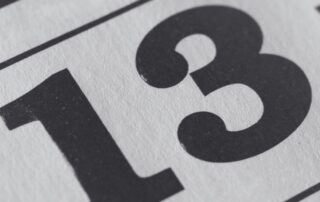
Because your boss, Franklin Roosevelt, suffers from triskaidekaphobia, a fear of the number 13. So, you must attend, making the number at dinner 14.

For Franklin Roosevelt, the fear of the number 13 showed up in other ways too.  He would not travel on the 13th day of the month.  If it looked like he must travel on that date, he would make sure the train departed at 11:50 pm on the 12th.

Roosevelt had other superstitions too. He carried a rabbit’s foot lucky charm during the 1932 campaign. He thought it was bad luck to light 3 cigarettes with one match as well and would criticize anyone who did so in his presence.

Since FDR died on April 12, 1945, some say he was just determined to not pass away on the 13th.

Ronald Reagan

You may be surprised to know that superstitions are not uncommon among the presidents.

The most superstitious president wasn’t FDR, but Ronald Reagan. He carried a lucky coin in his pocket. He tossed salt over his shoulder for good luck.

After the assassination attempt on his life by John Hinckley, Jr. in 1981, Reagan’s wife Nancy hired a San Francisco astrologer named Joan Quigley. Her job was to predict good dates and bad dates for the president’s schedule. She spent the last 7 years of Reagan’s presidency giving advice to Nancy, who would pass it along to the Chief of Staff.

“What does Joan say?” became a common question in the White House and the title of her book as well. Quigley wrote that she “was responsible for timing all press conferences, most speeches, the State of the Union addresses, the takeoffs and landings of Air Force One. I picked the time of Ronald Reagan’s debate with [President Jimmy] Carter and the two debates with Walter Mondale.”

William McKinley

William McKinley was also into the good luck charm superstition. When he was first elected to Congress in 1876 he regularly wore a red carnation in his lapel. He decided to keep wearing the flower for the rest of his career.  On occasion, if he had to say no to someone’s request, he would give them the carnation from his lapel as a token of ongoing friendship despite his decision.


In 1901, at the beginning of his second term, McKinley attended the Pam American Exposition in Buffalo New York.  He was wearing his lucky red carnation when he decided to give it to a young girl named Myrtle in the reception line. Moments later his luck ran out and he was gunned down by his assassin, Leon Czolgosz.

Other Presidential Superstitions

Harry Truman wanted good luck too, so he hung a pair of horseshoes over the entry to the Oval Office.

Barack Obama had a favorite superstition during his campaigns. He like to play basketball and shooting hoops was a form of relaxation.  In 2008, he realized that he won primary elections in Iowa and South Carolina when he shot hoops and lost elections in New Hampshire and Nevada when he didn’t. So, shooting hoops on election day became something he must do to win.

Woodrow Wilson also had a thing about the number thirteen. But unlike Franklin Roosevelt, he thought it was his lucky number.  He was inaugurated in 1913. He was named president of Princeton University in his 13th year of tenure. There are 13 letters in the name Woodrow Wilson.

Research from the Gallup organization shows that 35% of Americans over age 30 refer to themselves as superstitious, so it’s not a surprise that a portion of our presidents have their own superstitions. After all, they’re human and subject to all the typical behaviors out there.

Hmmm….speaking of superstitions,  wasn’t Bill Clinton’s cat “Socks” mostly black?

Interested in learning more about the presidents? Visit the Carolyn & James Millar Presidential Gallery on the upper level of the Booth Western Art Museum. The gallery features original letters and photographs of every U.S. president. Learn more at www.boothmuseum.org.
2025-10-06T15:18:30-04:00Booth Blog|

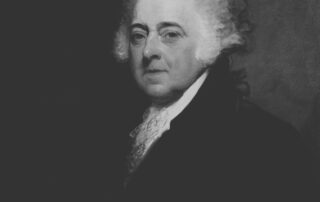
Adams and Bush Father and Son Presidencies

On a recent road trip to Arkansas and Texas I visited the presidential libraries of four contemporary presidents: Lyndon B. Johnson, George H. W. Bush, Bill Clinton, and George W. Bush.

In thinking about the two Bush presidents, I began to wonder how their backgrounds and experiences as father and son compared to the first father and son presidents: John Adams and John Quincy Adams.

Despite over 200 years of separation, you may be surprised to learn about all the things these families have in common.

Let’s begin with the obvious.  In both cases, the fathers and sons had the same first name.  John for the Adams and George for the Bushes, indicating that the sons were the first born in their immediate family.

All 4 were born in New England: 3 in Massachusetts (John Adams, John Q. Adams, and George H. W. Bush), while George W. Bush was born in Connecticut.  The Adams’s and Bushes came from wealthy, powerful New England families. After college, George H. W. Bush decided to move his family to West Texas to start an oil company, Zapata, from scratch.

John Adams and George H. W. Bush had immediate family members who were active in senior political roles. Bush’s father, Prescott, was a two term Senator from Connecticut while John Adams’s father-in-law, William Smith, was Speaker of the Massachusetts Assembly for 40 years.

Both John Adams and George H. W. Bush graduated from Ivy League schools: Harvard for Adams, Yale for Bush.  Both of their sons also graduated from Harvard. George W. Bush is the only president to date to earn an MBA.

The fathers each succeeded very popular presidents, with Adams following George Washington and Bush following Ronald Reagan.  Both fathers were also diplomats in their formative years, with Adams posted to Great Britain and Bush serving in China.  They were both best known for their expertise in foreign affairs as president.

John Adams and George H. W. Bush were directly elected to the presidency from the office of Vice President, a very rare event in our history.  They represent 2 of the 4 times this has occurred, with Thomas Jefferson and Martin Van Buren the other two to do it.

Both John Adams and George H. W. Bush were one term presidents, losing their bids for a second term to very popular men. Adams lost to Thomas Jefferson and Bush lost to Bill Clinton.  Son John Q. Adams was also a one-term president, losing to Andrew Jackson in 1828.  Among these four men, only George W. Bush served 2 terms.

Another commonality among these men is that both sons, John Q. Adams, and George W. Bush, were elected in very controversial decisions.

John Q. Adams was elected president in 1824, as the result of the referral of the vote to the House of Representatives.  His primary opponent was Andrew Jackson, along with Henry Clay and William Crawford. Although Jackson earned the most popular votes as well as the most electoral college votes, he did not win a majority.  Therefore, the election was decided by the House of Representatives who selected John Q. Adams, a decision derided by Jackson as a “corrupt bargain” between Adams and Clay. While history is a bit murky on this topic, it’s clear that Clay was the dealmaker. The tainted reality came when Adams selected Clay as his Secretary of State, then considered a steppingstone to the presidency.  One tipoff:  Adams was a compulsive diarist, yet the date he met with Clay is blank in his journal.

Many readers will recall the election of 2000 where George W. Bush defeated Al Gore. This result came about after lengthy, contested reviews of votes cast in Florida, with the Supreme Court ultimately deciding in Bush’s favor.  That election put the words ‘hanging chads’ into our lexicon forever.

Both John Adams and George H. W. Bush lived to see their sons as president, a gratifying and rare occasion for them.

History shows their 4 presidencies as consistently ranked “average”. In the latest C-Span rankings of 45 completed presidencies in 2021, they rank as follows:  15th (John Adams), 17th (John Q. Adams), 21st (George H. W. Bush), and 29th (George W. Bush). They are valued as dedicated and patriotic public servants but the first 3 of them found themselves unable to compete with clever politicians like Jefferson, Jackson, and Clinton.

I was surprised by all the ways the Adams and Bush fathers and sons have backgrounds and experiences in common.  I found it worth sharing.

Interested in learning more about the presidents? Visit the Carolyn & James Millar Presidential Gallery on the upper level of the Booth Western Art Museum. The gallery features original letters and photographs of every U.S. president. Learn more at www.boothmuseum.org.
2025-09-15T15:19:22-04:00Booth Blog|

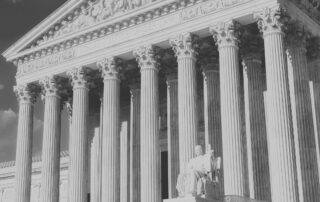
Presidents and Supreme Court Nominations

Imagine Thomas Jefferson, John Adams, and James Madison having a drink and relishing the concept of checks and balances they’d just enshrined in our founding Constitution.

“Just wait until they need a new Supreme Court Justice. They’ll have to engage all three branches of government to accomplish it. Won’t that be glorious?”

Since 1789 that “glorious” experience has been accomplished 164 times. The President (Executive Branch) makes a nomination to the Senate (Legislative Branch), which provides “advice and consent” for the Supreme Court (Judicial Branch).

The Founding Fathers also imagined this process to be relatively pure and free of political shenanigans. In that, they suffered from naivete. Right off the bat, George Washington, who had the most justices confirmed among all the presidents at 10, had one of his nominees rejected by the Senate.   James Madison, the 4th President, had one nominee rejected. Over time we’ve seen 12 rejections in all, the most recent being Ronald Reagan’s nominee Robert Bork, in 1987. George W. Bush withdrew two nominations during his two terms. Merrick Garland was nominated by Barack Obama, but no action was taken.

The make-up of the Supreme Court, as realized by the number of justices, also evolved over time and was subject to political pressures.  Our 17th President, Andrew Johnson, was so reviled that the Congress passed a law in 1866 to reduce the number of justices from 10 to 8, to prevent Johnson from nominating any replacements. After Johnson survived impeachment (by one vote) and left office in 1869, Congress passed another law to cancel the 1866 law and settle the number of justices at 9, where it’s been ever since.

All was quiet on that front until 1937. Franklin D. Roosevelt, who was 9 for 9 in getting his nominees to the court confirmed, got a firm slap from the Court over some of his New Deal laws. Roosevelt was furious and sought ways to work around the Court. He floated the idea of expanding the number of justices from 9 to 15, a move that became known as court packing.  His strategy never made it into law.

For decades, these nominations received scant attention, with 52% of them confirmed by voice vote alone. The last voice vote was for one of Lyndon Johnson’s nominees in 1965. The nature of our politics now demands a roll call vote where a Senator must cast their vote in public, thus open to accountability, criticism, and pressure.

The Senate Rules for confirmation have also been adjusted over the years. It used to require a 67% majority for confirmation. Later, it was lowered to 60%, and as of 2017, now requires only a simple majority.  Given the current polarized political environment, if the bar was 67%, it’s likely no justices would ever be confirmed, eventually breaking down our government’s judicial branch entirely.

Setting aside the political nature of these nominations, some interesting bits of trivia have accumulated over the years.

William Howard Taft is the only man who has served both as president and Supreme Court justice.  While Chief Justice Taft lobbied Congress to build the Court its own home across the street from the Capitol.  He resigned his position to retire, as many do, just prior to his death in 1930.

One other man might have accomplished Taft’s feat, had Charles Evans Hughes defeated Woodrow Wilson in 1916. Hughes resigned his seat on the Court to run for president. Later, Herbert Hoover nominated him to rejoin the Court and he did so in 1930.

Also of interest: John Marshall, our 4th Chief Justice, was nominated by John Adams. He was Thomas Jefferson’s cousin, although they were in fact political rivals.

In times of national crisis, the Chief Justice has occasionally played a significant role in resolving the issue with presumed integrity and without bias.  Earl Warren served as the head of the Warren Commission in the 1964 investigation into the assassination of John F. Kennedy.  In 1974, Warren Burger headed the Court during the Watergate crisis, supervising several milestone decisions that ultimately led to the resignation of Richard Nixon.

Lyndon Johnson nominated Thurgood Marshall as the first black on the Court in 1967. Ronald Reagan nominated Sandra Day O’Connor as the first female on the Court in 1983. Barack Obama nominated Sonia Sotomajor as the first Hispanic on the court in 2009. Joe Biden nominated Ketanji Brown Jackson as the first black female onto the Court in 2022.

In the 21st Century, given the high stakes involved, the process in the future likely will not be “glorious”.

Interested in learning more about the presidents? Visit the Carolyn & James Millar Presidential Gallery on the upper level of the Booth Western Art Museum. The gallery features original letters and photographs of every U.S. president. Learn more at www.boothmuseum.org.

2025-08-29T10:42:07-04:00Booth Blog|

A Monument Long in the Making

If you’ve been to Washington DC, one lasting memory is surely of The Monuments. From the Lincoln Memorial to the Washington Monument obelisk, from the FDR Memorial, to the circular Jefferson Memorial, our nation’s capital doesn’t lack for massive marble and granite remembrances of its heroes.

As you may know, a new one was dedicated in September 2020 for Dwight D. Eisenhower, an American war hero of World War II who served 2 terms in the highest office.

However, you may not know the rest of the Eisenhower Memorial story.

That “Ike” deserves a monument is indisputable.  He rose from rural Kansas to graduate West Point in the ‘class that the Stars fell on’, due to all the generals who came from that group. He did play football, and after a severe injury, was a football coach at Army.

His army career moved relatively slowly between the World Wars, but once we were attacked at Pearl Harbor, his effective leadership and political skills took him to the very top as Supreme Allied Commander and to victory in Europe.

You may recall seeing signs on our interstate highways for the Eisenhower Interstate System.  Ike had the idea for this huge network having led an army expedition across rural USA in 1919 to demonstrate the mobility of motorized army equipment. They traversed the Lincoln Highway for months, finally arriving in San Francisco, whereupon Eisenhower concluded there was a tremendous need for a network of roads that could quickly move an army in case of attack. As President, he proposed this massive network in 1956, creating thousands of jobs and igniting a booming suburban development that continues to this day.

After his stunning success in Europe, many wondered if he would follow the footsteps of so many military heroes from our past and run for President.  He wasn’t sure either, so it took nearly 8 years for him to walk into the Oval Office in January 1953.  In the interim, he served as President of Columbia University, helping the trustees raise millions for the school.

He served a full two terms as our President, succeeding Harry Truman.  Richard Nixon was his Vice President for both terms. Ike retired in 1961, passing the torch to John F. Kennedy.

Ike died in 1969, and surprisingly it took 30 years to have a memorial to this hero approved by Congress.  As they say, ‘the wheels of bureaucracy turn slowly’ in D

It then took 21 more years to get the memorial on 4 acres constructed for $150 million! Slowly turning wheels indeed.

The actual construction only took 2.5 years, light speed compared to the 30-year construction of the Washington Monument, and 8-year construction (using Georgia marble) of the Lincoln Memorial.

We now have another massive monument to a military/presidential hero in Washington. Touring these legendary places is among the highlights of any trip to DC, whether it’s your first or 101st trip. Some are most famous and easily located. Some, such as the Theodore Roosevelt Memorial, are harder to find, as it’s on an island in the Potomac River!

Plan to see the Eisenhower Memorial next time you are in DC. It’s located on the National Mall between the US Capitol and The Smithsonian.

Interested in learning more about the presidents? Visit the Carolyn & James Millar Presidential Gallery on the upper level of the Booth Western Art Museum. The gallery features original letters and photographs of every U.S. president. Learn more at www.boothmuseum.org.

2025-08-18T15:27:40-04:00Booth Blog|

Presidents in Retirement: Richer or Poorer?

So, you’ve been President of the United States.  How do you do earn a living after having the most powerful job on earth?

The answer isn’t as straightforward as you might think.  In the majority of cases, it’s not at all realistic for them to return to the occupation they held prior to the presidency.  For example, Dwight Eisenhower couldn’t just resume his Army career after his two-term presidency.

The level of poverty some of the founding presidents experienced can be surprising: both James Monroe and Thomas Jefferson were ‘land rich and cash poor’. Monroe was eventually forced to move to New York to live with his daughter in 1831. Jefferson had to sell his book collection to the Library of Congress to raise cash.

Prior to 1958 presidents received no pension. In fact, the spectacle of a former president going broke, as Harry Truman experienced, was the catalyst to passing a law granting pensions to ex-presidents to protect the ‘dignity of the office’.

But didn’t they make great money while they were president?  Not really. Congress sets the salary and benefits for the president. It’s been changed only 5 times in our 235-year history.  George Washington made $25,000 a year as president. Bill Clinton made $200,000 in 1998. Joe Biden earns $400,000 a year. In modern times, that’s not a lot of money when compared to athletes, entertainers, and CEOs.

Yes, former presidents get a pension now: $210,700 per year, same as a working cabinet member. Plus, Secret Service protection for life, office expenses, etc.

So what did they do to make a living? Starting in the 20th century, presidents mostly made money by writing books and giving speeches. Doing much more was considered ‘undignified’; it wasn’t appropriate to ‘cash in’ on the office.

All that changed in a big way with Gerald Ford.

Ford was a 25-year member of Congress who ascended to the Vice Presidency when Spiro Agnew was forced from office for criminal conduct. Richard Nixon, embroiled in the Watergate Affair, needed Ford for his squeaky-clean image and ease of gaining Senate approval. Months later, Nixon resigned, elevating Ford to the presidency.  Ford spent 30 months in office, losing to Jimmy Carter in 1976.

Gerald Ford wasn’t wealthy, but he did want financial security.

His first decision was to endorse a collection of medals depicting 100 significant events in presidential history. At the time he accepted the endorsement fee, he said: “I feel totally justified in doing it.”

But that was just the beginning. Ford became a hot commodity, sought after for positions on corporate boards of directors, consulting contracts, plus the usual book deals and speeches.

In a two-year period, he joined 8 different boards, many of which also came with lucrative consulting contracts. He claimed to refuse many who approached him and did not join any defense contractor boards. In 1986 he earned over $500,000 from these board seats, made 30 speeches at $15,000 a pop, and took in his pension of $153,000.

While other living ex-presidents such as Carter and Nixon stuck to writing books and refused all offers of board seats, Ford claimed a ‘clear conscience’ in pursuing these opportunities. He broke the mold and set the precedent for future presidents to follow similar paths.

Today, ex-presidents such as Bill Clinton and Barack Obama earn tens of millions of dollars on book deals alone.  Clinton went heavy on the speaker’s circuit, earning $200,000 a speech, making many millions each year. Ronald Reagan made $2 million for one speech and visit to Japan just 10 months after his retirement.

To be fair, Ford and most former presidents such as Jimmy Carter, George H.W. Bush, Bill Clinton, and George W. Bush also support charities and global relief efforts with their time and influence. But it seems our media – driven, pop culture world can’t get enough of these men, no matter their political party.  They’ve reached the pinnacle of influence and are able to command deals that might make our Founding Fathers scratch their collective heads as to the financial heights the presidency can lift a man.

The olden days of retiring to a quiet life of leisure seems quaint now. Gerald Ford broke down those walls with a path – clearing clarity for his successors to follow. Safe to say, our ex-presidents no longer worry about paying the bills.  They just have to worry about being perceived as greedy and foregoing the ‘dignity of the office’.

Interested in learning more about the presidents? Visit the Carolyn & James Millar Presidential Gallery on the upper level of the Booth Western Art Museum. The gallery features original letters and photographs of every U.S. president. Learn more at www.boothmuseum.org.

2025-08-04T15:27:51-04:00Booth Blog|

Violins to Harmonicas: Presidents Who Could Play

When I think of the presidents and music, my mind drifts from the elegance of Pablo Casals’ cello performance at the Kennedy White House in 1961 to boisterous convention halls playing John Philip Sousa marches.

Yet, a select few of our presidents have been musicians of the first order, able to play and be recognized for their skills.

Let’s examine them in roughly chronological order.

Thomas Jefferson was a virtuoso violinist whose skills helped him win the hand of Martha Skelton in marriage. Her other suitors backed away once Jefferson serenaded Martha on his violin.  He also played cello and clavichord.

John Quincy Adams our 6th President, was an accomplished flutist who wrote his own compositions while attending Harvard University.

Our 9th President, John Tyler, who ascended to the presidency after the death of William Henry Harrison, trained from an early age to become a concert violinist. His father pressured him to become a lawyer instead, so Tyler dropped his professional musical aspirations. After his term in office, he often played with his second wife Julia, an accomplished guitarist, to entertain their guests.

Abraham Lincoln and Woodrow Wilson also played violin after their oval office hours. Calvin Coolidge and Ronald Reagan played harmonica.  Coolidge’s Vice President, Charles Dawes, wrote the later-to-be-famous song All in The Game.  Gilded Age president Chester Arthur played the banjo.

Warren Harding played multiple instruments too, famously playing the tuba at the 1920 Republican Convention to celebrate winning the nomination for president.

Both Harry Truman and Richard Nixon were accomplished pianists, honing their skills from an early age. However, this common talent was at the center of a feud that lasted over a decade.

Nixon, who wrote Concerto #1 of his own at an early age, also played violin, saxophone, clarinet, and accordion.  He ran for Vice President on the 1952 Republican ticket with Dwight Eisenhower, becoming the aggressive attacker of then sitting President Harry Truman.

Truman, a Democrat, also trained on the piano from an early age, and famously played as a politician, once with movie star Lauren Bacall sitting atop the piano.

Harry Truman never took kindly to criticism.  He didn’t like all the accusations tossed toward his administration by Richard Nixon during the 1952 campaign. It’s clear he held a grudge against Nixon long after he left the White House and Eisenhower/Nixon took over.

The feud spilled out in public in 1958 when Harry refused in advance to play a duet with Nixon at the National Press Club in Washington.

In 1969, as president, Nixon tried to mend fences with Truman, donating the piano Truman played at the White House for use at his retirement home in Independence Missouri.  Nixon played the Missouri Waltz for Harry and Bess, but Truman stood by stone faced and unwilling to smile for the cameras, holding onto that grudge.

Nixon went on to set new standards for White House public entertainment by playing piano to accompany singer Pearl Bailey and duets with Duke Ellington.

In modern times, Bill Clinton’s saxophone-playing appearance on the Arsenio Hall Show in 1992 may have been a turning point in that campaign against George H. W. Bush. He played Elvis Presley’s Heartbreak Hotel wearing sunglasses and won over the hearts and minds of many younger and minority voters. Once in office, Clinton had a special music room set up at the White House so he could play at any time.

Lastly, although he did not play an instrument, Barack Obama was a pretty good singer, crooning to Sweet Home Chicago and Let’s Stay Together.

Altogether, 13 of our 46 presidents have had legitimate musical skills, helping us flesh out more of their backgrounds and bringing them to life.

Interested in learning more about the presidents? Visit the Carolyn & James Millar Presidential Gallery on the upper level of the Booth Western Art Museum. The gallery features original letters and photographs of every U.S. president. Learn more at www.boothmuseum.org.

2025-07-14T13:03:44-04:00Booth Blog|

Presidents in Command of Foreign Languages

How has the ability to speak in foreign languages evolved over the history of the American presidency? Of our 46 presidents, 21 could speak at least one language other than English. But the overall linguistic trend may be the opposite of what you think.

Many of our first presidents had command of multiple languages, reading, writing, and conversing in French, German, Latin, Greek, Italian, Hebrew, and Dutch.

This fluency among our early presidents came from two primary factors. First, 17th century studies placed great emphasis on the classical languages of Latin and Greek. The other factor involved government assignments in foreign capitals.  John Adams, Thomas Jefferson, James Monroe, and John Quincy Adams all represented our country on foreign soil in multi-year assignments, allowing them significant exposure to the local language.

John Quincy Adams could speak seven languages, four fluently (French, Dutch, Latin and German), and three partially (Russian, Greek, and Italian).  He prided himself on gaining and maintaining fluency, rising early in the morning to translate one page of English to the language he wished to master.

Thomas Jefferson could speak five languages, 3 fluently (French, Latin and Italian), and 2 partially (Greek and Spanish).  It’s said that he picked up Spanish on a 19-day crossing of the Atlantic by reading a primer and Don Quixote.

In the 19th and early 20th centuries, many of the presidents could speak at least one foreign language. Theodore and Franklin Roosevelt could each speak three. Each of them gained their fluency in German and French due to their tutoring by governesses imported for the task, or from extended travels with their families.

But interestingly, as the 20th century rolled on, fewer and fewer presidents could speak a language other than English.

Only one of our most recent ten presidents could speak one: Bill Clinton could do a passable German. The other nine recent presidents either spoke no foreign language or could only partially do so. George W. Bush and Jimmy Carter made stabs at Spanish, and Barack Obama knew a few phrases of Indonesian from his early years.

What is the root cause of this trend? One would think that, given our modern globally connected world, being able to converse in foreign languages would be helpful, and that such skills would have become more relevant than ever in the 21st century, right?

Not so much. Since 1900 the world has evolved with the acceleration of English as the dominant language in many forums, allowing our modern presidents to focus their energies less on learning and maintaining foreign language skills, and more on building their skills in economics and world affairs. In an increasingly connected world, English has assumed a position as the dominant language of global communication, and presidents are part of that trend.

That said, there have been some memorable situations or public displays of presidents using foreign languages over the years.

Herbert Hoover was fluent in Latin and Mandarin Chinese. He and his wife Lou painstakingly translated a classic mining text from Latin to English so he could benefit in his early, very successful mining career.  Later, after working for the Chinese Emperor on a mining contract and getting caught in the Boxer Rebellion, Hoover and Lou would frequently speak to each other in Chinese when they didn’t want others around them to eavesdrop on their conversations.

One of the most famous presidential speeches involving purposeful use of foreign phrases was given by one of the presidents who could not speak a foreign language at all. In 1963, John F. Kennedy spoke to a massive crowd of 120,000 in Berlin. At the height of the Cold War, he delivered an eloquent speech aimed at both the Germans before him and the Russians listening in. He said “Ich bin Ein Berliner!”, meaning “I am a Berliner!”.  Some say it was his best speech, powerfully providing inspiration to a city torn in half by the Berlin Wall.

As noted, Bill Clinton spoke German. As president, in 1994 he too had an opportunity to address a large crowd at the Brandenburg Gate in Berlin. Like Kennedy, he sprinkled his speech with German phrases, much to the joy of the German people.

The trend away from fluency in foreign language among our presidents is now well established. In the future, it’s unlikely we’ll see presidents conversing with foreign leaders, their constituents, or others in any language other than English.

Interested in learning more about the presidents? Visit the Carolyn & James Millar Presidential Gallery on the upper level of the Booth Western Art Museum. The gallery features original letters and photographs of every U.S. president. Learn more at www.boothmuseum.org.

2025-06-30T15:58:50-04:00Booth Blog|
Go to Top