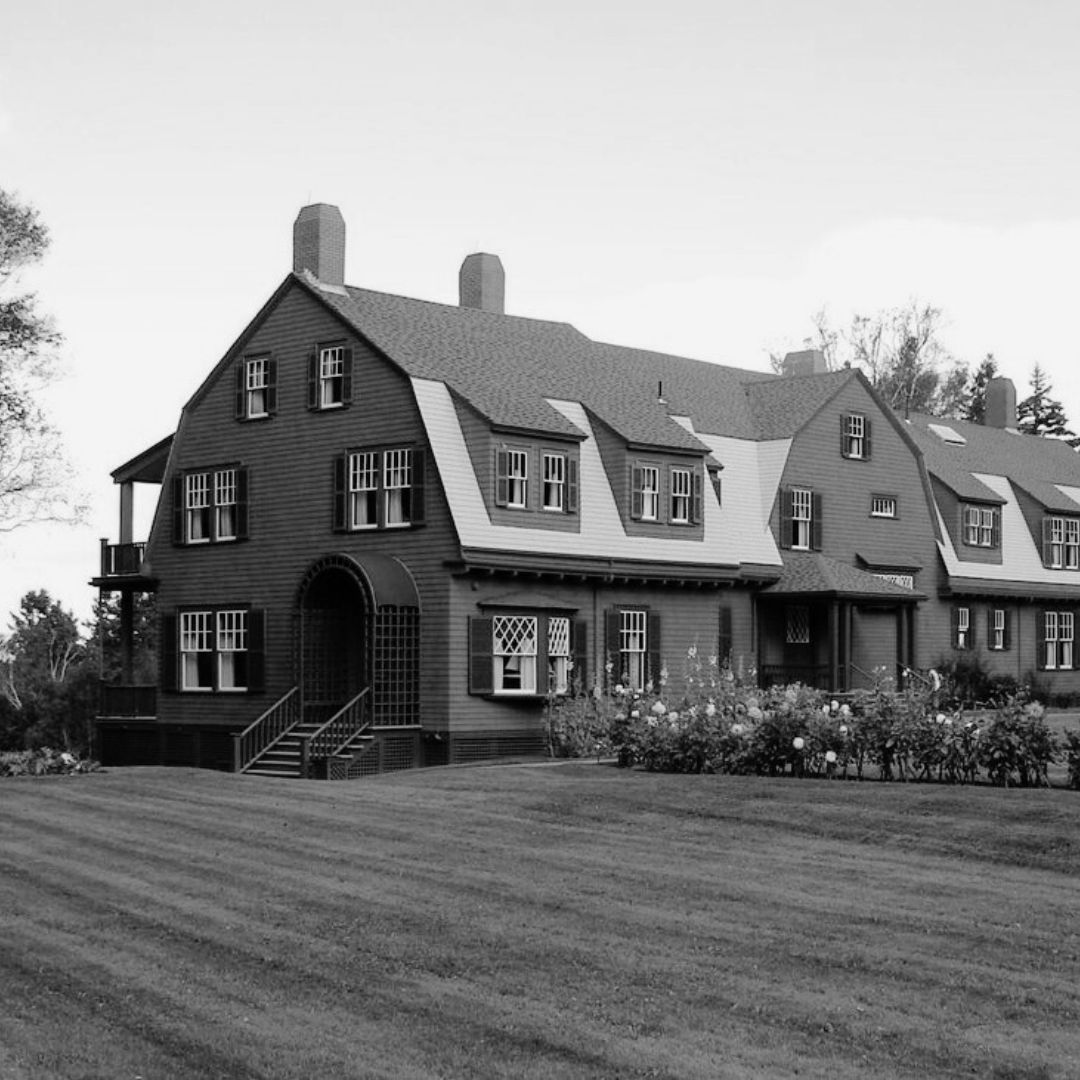
On a recent trip to Canada, I had the opportunity to visit Campobello, Franklin Roosevelt’s family “cottage” on an island just outside the US. It was here that FDR contracted polio in 1921 at age 39. I saw the room where he sat paralyzed for six weeks while multiple doctors tried to determine his condition and ultimately inform him of his prognosis.
Franklin Roosevelt was forever changed, causing him to re-evaluate every aspect of his life. Part of his plan involved the purchase of a spa at Warm Springs Georgia in an attempt to overcome the paralysis. That he later became Governor of New York, and four term President of the United States is well known, and a testament to his resilience.
Peering into that room and trying to imagine his physical and emotional struggles, started me thinking about other presidents who overcame significant life challenges and setbacks to rise to the peak of power.
Franklin Pierce (1853-1857) lost all three of his children before he took the oath of office. One died in infancy, one from typhus, and the third in a train accident just days before his inauguration. His resilience was tempered by his noted alcoholism, ultimately taking his life due to cirrhosis of the liver just a few years after his term ended.
Abraham Lincoln (1861-1865), perennially voted our best president by historians, had many failures and losses in his life. He lost jobs, nominations, and multiple elections in his career. He lost children, one in infancy, and one, Willie, in 1862 while in office. He also suffered periodic bouts of severe depression from time to time over much of his life. His ability to rise above these many blows and succeed in holding the Union together may be the ultimate in presidential resilience.
Ulysses S. Grant (1869-1877) served in remote army posts after his graduation from West Point. Influenced by his peers plus complete boredom and loneliness, he relied on alcohol to get by. During his epic military campaigns in the Civil War, Grant was fastidious in avoiding alcohol. Later, as president, he would only drink short toasts. Historians disagree whether he was truly an alcoholic or not, but his determined and mindful approach after 1861 is admirable.
Theodore Roosevelt (1901-1909) had severe asthma as a child leaving him weak and sickly. His father took him on carriage rides in New York City at night to get some cool air into his lungs. Theodore worked hard to develop his body, adopting the strenuous life as his lifetime approach.
Theodore suffered the loss of his wife Alice in childbirth, and also lost his mother the same day. He gave the baby to his sister to raise while he moved west to the Dakotas to become a rancher and try to ease his mind from these losses.
Later, his aggressive approach to life led Roosevelt to boxing for sport even during his White House years. Unfortunately, he took a punch in the eye and lost his vision in that eye as a result. Roosevelt’s resilient approach to life created a vigorous presidency.
After his presidency, Roosevelt travelled the unexplored ‘River of Doubt’ in Brazil, where he nearly died from an infected leg wound suffered while freeing a canoe stuck on rocks during the trip. Later, the river was named after him, the Rio Roosevelt.
John F. Kennedy (1961-1963) also was a sickly child. He contracted scarlett fever at age 3, had spinal surgery at age 30, and was diagnosed with Addison’s disease in 1947 while a Congressman from Massachusetts. Today, his childhood maladies suggest he was intolerant of gluten, now known as celiac disease. Despite these illnesses, he showed courage, vigor, and possessed a ‘never give up’ attitude.
Gerald R. Ford Jr. (1974-1977) was born Leslie King in Omaha Nebraska. His mother moved him out of the house just 17 days later, due to his father’s abusive violence. Later, his mother re-married Gerald Ford Sr. and the future president took his name. This tough start in life didn’t hold him back, since he achieved the family stability he needed to thrive.
Ronald Reagan (1981-1989) also had a difficult childhood. His father was an alcoholic and the family moved frequently around the Midwest in search of work. Reagan sometimes needed to pick his father up off the ground after a late-night binge and drag him inside the house. Some have suggested that Reagan’s personality was directly affected by these experiences, making it difficult for him to maintain close relationships, as he was known for having few if any close friends. He made up for it with his sunny, optimistic personality that helped him win over voters.
As I have mentioned before, presidents are all too human. Their experiences lend new meaning to the Paulo Coelho phrase “the secret of life is to fall 7 times and get up 8”, meaning to choose never to give up hope and always strive for more.
Interested in learning more about the presidents? Visit the Carolyn & James Millar Presidential Gallery on the upper level of the Booth Western Art Museum. The gallery features original letters and photographs of every U.S. president. Learn more at www.boothmuseum.org.