
Marketing

About Morgan Huntington

This author has not yet filled in any details.
So far Morgan Huntington has created 5 blog entries.

Matriotism: Celebrating 250 Years of Inspiring American Women Through Quilts

On View: November 7, 2026 – February 7, 2027
Art For Lunch: Wednesday, November 4, 2026

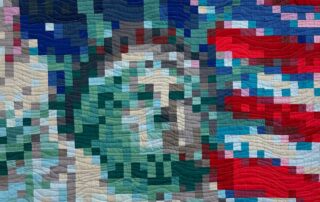
The Booth Western Art Museum is honored to present the traveling exhibition produced by the East Cobb Quilters’ Guild, Matriotism: Celebrating 250 Years of Inspiring American Women Through Quilts. A selection of 24 decorative quilts will focus on the critical role that women contributed to the founding of our nation and their long-term impact on American society. Some of the women celebrated by the quilts include Sacagawea, Lady Liberty, Georgia O’Keeffe, Rosalynn Carter, Harriet Beecher Stowe, Dorothea Lange and Dolly Parton.

The East Cobb Quilters’ Guild (ECQG) was founded in 1982 and has 400 members from across the greater Atlanta metropolitan area and beyond, who enjoy creating, learning, teaching and promoting the art of quilt making.

The Booth invites the community to the Art For Lunch program on November 4, 2026 to learn more about the ECQG, and the art of quilting from members of the guild.


© Robin Schick, Lady Liberty, 2025, fabric, 40 x 45″

Evolution of the President’s Secretary

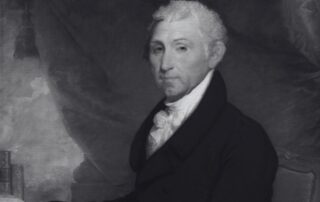
It’s 1819 and you have an important matter to discuss with James Monroe, the President of the United States. You arrive in your carriage, enter via the front door of the White House, walk up to the second floor, and stop at the desk of the president’s private secretary, Joseph Jones Monroe, the president’s younger brother.  He smiles, asks how much time you need, and escorts you into the presidential office.

Just like that, you are face to face with the most powerful man in America.

How things have changed!

Today, the Executive Office of the President includes over one thousand core employees, augmented by another three thousand workers and support staff with a budget over $400 million per year.

How did we get here?  How did the role of the president’s secretary evolve over the decades?  Who were some of the most influential people to hold this important role?

The President’s Private Secretary

From the nation’s founding, the president’s private secretary was one of a very few people dedicated to supporting the president.  These people were mostly relatives of the president, who paid their salary out of their own pocket. Their duties included handling private correspondence, maintaining the president’s calendar and appointments, and serving as a gatekeeper by determining who could see the president.

One of the most famous private secretaries was Meriweather Lewis. He worked for Thomas Jefferson from 1801-1803, before Jefferson asked him to lead the exploration of the recently completed Louisiana Purchase. The Lewis and Clark Expedition explored the vast new territory from 1804-1806.

Private Secretary at the White House

In 1857, during the administration of President James Buchanan, Congress created the position of Private Secretary at the White House. The first to hold this position was Buchanan’s nephew, J. B. Henry.

By far the most influential private secretary was John Hay, who served Abraham Lincoln from 1861-1865.  Hay was a precocious young man, having graduated from Brown University at age 20 and being accepted by the bar in Illinois in 1861. He was friends with John Nicolay, and they worked hard on the first Lincoln presidential campaign in 1860. Hay and Nicolay accepted positions as secretaries to Lincoln.   At age 23, Hay was a combined press secretary, composer of correspondence, and gatekeeper, controlling access to President Lincoln throughout the Civil War.

Hay and Nicolay co-authored a ten volume history of Lincoln in 1890 that preserved Lincoln’s story and set down the record as they saw it, making it the definitive work that informs our understanding of the Lincoln presidency.

Hay supported William McKinley for President in 1898 and was rewarded by becoming Ambassador to England and then Secretary of State. Theodore Roosevelt, who assumed the presidency following McKinley’s assassination in 1901, kept Hay on as his Secretary of State.  Hay negotiated the Hay-Bunau-Varilla Treaty with Panama to secure the location of Roosevelt’s much-desired canal.

Executive Office of the President

In 1939, Congress approved Franklin Roosevelt’s recommendation to create the Executive Office of the President, becoming the foundation for the modern White House staff.  The office of Secretary to the President was greatly diminished in stature, while the Appointments Secretary grew in importance as the gatekeeper to the president.

The position of Secretary to the President continued through the administration of Harry Truman (1945-1953). Dwight D. Eisenhower (1953-1961) took over from Truman and re-organized the Executive Office, doing away with the position altogether.

Personal Secretary to the President

John F. Kennedy (1961-1963), who followed Eisenhower as president, wanted his own personal secretary to be responsible for private correspondence and to coordinate family matters. His personal secretary was Evelyn Lincoln.

Richard Nixon’s personal secretary was Rosemary Woods. Always a Nixon loyalist, she became embroiled in the Watergate scandal in 1974. She inadvertently deleted 18 minutes of a tape recording from a June 20, 1972, Oval Office meeting, leading to grand jury testimony and suspicions of tampering with evidence. Richard Nixon resigned in August 1974, the only president to do so.

The Modern Personal Assistant

Today, the position is much diminished from its earlier incarnations. They keep a log of who enters the Oval Office and how long they stay, as well as a few clerical duties assigned. While the person sits right outside the Oval Office, the major duties once held are scattered among hundreds of other workers at the White House.

Naturally, the world has become much more complicated in modern times, with the presidency itself growing in stature and impact on our lives and those around the world.  Being involved in an organization of thousands is a far cry from the one or two helpers that you would have encountered while trying to see President Monroe that day in 1819.

Interested in learning more about the presidents? Visit the Carolyn & James Millar Presidential Gallery on the upper level of the Booth Western Art Museum. The gallery features original letters and photographs of every U.S. president. Learn more at www.boothmuseum.org.

2026-07-29T09:12:29-04:00Booth Blog|

Wine at the White House

Written by Chris Binkert

Wine has a long history among the presidents.  From George Washington on, every president has, in one way or another, used wine to further their agendas, recognize a diplomat, toast a friend, or just have a glass for personal enjoyment.

Wine at the White House survived the Temperance Movement, Prohibition – and even the occasional teetotaler president.

Founding Fathers

George Washington (1789-1797) loved madeira, a fortified wine popular in colonial America.  Coming mostly from an island off the coast of Africa owned by Portugal, it was fortified with a distilled spirit like brandy to strengthen it for the long journey to America.  Washington tried to produce wine at Mt. Vernon but wasn’t successful.

Thomas Jefferson (1801-1809) became America’s foremost presidential wine enthusiast owing to his service as Minister to France in the 1780’s. In that post he became very familiar with French wines, then considered the best in the world.  He said, “good wine is a necessity for me”, and imported thousands of bottles.

He advised other presidents, giving suggestions of particular vintages and using his contacts to place orders.  He once ordered 30 dozen bottles of Chateau Y’quem for George Washington and had 10 dozen sent to himself.  Jefferson also liked Chateau Margaux, a red wine from the Bordeaux region of France that today sells for $600 a bottle.

Early America’s first efforts to produce wine were largely a failure. Dolley Madison, First Lady of James Madison (1809-1817), banned American wines from the White House due to their inferior quality.

Madison’s successor, James Monroe (1817-1825), also served as Minister to France and enjoyed their wines. He once caused a minor scandal by ordering 1,200 bottles but charged it to the ‘furniture’ account instead.

19th Century

Zachary Taylor (1849-1850) and Millard Fillmore (1850-1853) served in office during the onset of the Temperance Movement and personally did not drink much. However, they served wine at the White House due to its diplomatic importance.

The first president to serve an American wine was Abraham Lincoln (1861-1865).  In 1864 he was gifted a case from California and served it to his guests.

Rutherford Hayes (1877-1881) and his First Lady Lucy were staunchly opposed to alcohol and didn’t serve any at the White House, offering guests fruit juice instead. This earned the First Lady the nickname Lemonade Lucy.

20th Century

During Prohibition (1920-1933), the presidents were more limited in using and transporting wines but received permission from Congress to continue to serve for toasts and diplomatic purposes.

You may wonder where the concept of ‘toasting’ originated, and why it’s called ‘a toast’. The ancient Greeks started the tradition of raising a glass for good health and friendship; but the Romans added a new aspect to the custom. Back then, the wine might be poisoned or impure, so the Romans dunked pieces of burnt bread into their wine to soak up impurities and then proceeded to raise the glass to friendship and good health, thus making it a toast.

John F. Kennedy (1961-1963) and First Lady Jacquline renewed the usage of wine at a whole new level. Jackie attended school in France and spoke French fluently.  Jack and Jackie served Chateau Margaux and Chateau Haut-Brion.

Richard Nixon (1969-1974) introduced Schramsburg Blanc de Blancs as the ‘wine of peace’. Produced in California, Nixon had the sparkling wine on his famous ground-breaking trip to China in 1972 to toast Premier Chou En-Lai.  Schramsburg has been used by every president since Nixon for special diplomatic events.

Jimmy Carter (1977-1981) banned the use of hard liquor at the White House but allowed wine to be served. Jimmy also produced his own home-made wine, using Scuppernong and Muscadine grapes. He gave it to friends and family and auctioned off bottles to raise money for the Carter Center.

Carter also made a big change to state dinners. He moved the wine toast to the beginning of the meal, a practice followed by all subsequent presidents. At state dinners three wines are typically served, a light white for the first course, a red with the entrée, and a champagne or sparkling wine with dessert.

Ronald Reagan (1981-1989), the former Governor of California, intentionally used wine at the White House as a way to help boost the wine producers of his home state.  The sales of Kendall-Jackson chardonnay boomed after First Lady Nancy Reagan said how much she enjoyed it.

Modern Day

Three of our four most recent presidents do not drink alcohol.  However, George W. Bush, Donald Trump and Joe Biden still conducted the toasts, sometimes with just a sip of wine or substituting juice instead.

No longer dependent on European wines, our presidents almost exclusively serve American wines at the White House.

As you can see, wine has a long-standing place in the conduct of the presidency. Let’s raise a glass to honor this great tradition!

Interested in learning more about the presidents? Visit the Carolyn & James Millar Presidential Gallery on the upper level of the Booth Western Art Museum. The gallery features original letters and photographs of every U.S. president. Learn more at www.boothmuseum.org.

2026-07-16T13:53:59-04:00Booth Blog|

The Revolution That Brought Us Together

Written by: Chris Binkert

As we arrive at the 250th anniversary of the founding of our country, let’s pause and reflect on the events that made it happen. To admire the sacrifices that drove it. To appreciate the burning sense of confidence that grew from it. To gain a fuller understanding of the people and events that pulled it off.

In 1776 the odds of winning a war against the British were very low.  Britain had the largest and best trained military in the world. The British king had ruled the 13 colonies for 169 years. They enjoyed the support of 20 percent of the colonial population, plus a limited hold on another 35 percent who were on the fence. There was no capital city of the colonies, no government, no mass communication devices, no foreign allies, and no escape from the threat of death to those deemed traitors to the crown.

On top of that, the 13 colonies were anything but ‘united’.  They were fractious, suspicious, and unevenly behind the revolution.  There were vast differences between people from Massachusetts, Virginia, and Georgia.

What the British did not and could not control was the genuine and inspirational hope that permeated the 45 percent of colonists who were empowered by a fervor that independence was worth the fight, the sacrifice, and the death and destruction sure to come.

Setting the Stage

The Stamp Act of 1765 was the first direct tax levied on the American colonies by the British Parliament.  Meant to raise funds to pay off massive debts from the 7 Year’s War against France (1756-1763) and to finance the presence of troops in North America, the Act immediately enraged the colonies.

The opposition was based on the concept of No Taxation Without Representation.  It was so unpopular that it was repealed in a year.  However, it unleashed an unprecedented level of cooperation among the colonies and inspired the creation of the Sons of Liberty that organized protests against it.

The 10 years between 1765 and 1775 saw a long period of underground efforts to organize resistance to the crown.  The Sons of Liberty and other secret societies met in safe places to share news and plan events. There were committees of correspondence that set up shadow governments in towns and drafted letters to share political news and promote a united front.

During this period, the British Parliament passed other taxes on the colonies. The Townshend Acts, the Tea Act, and the Coercive Acts (known as the Intolerable Acts), were met with rising rejections, leading to the Boston Tea Party in 1773.

In March 1775, Patrick Henry gave a moving speech in Virginia where he said, “Give Me Liberty or Give Me Death!”

The Spark

With mounting fury, the conditions for a revolutionary break with the crown was like a dry tinderbox awaiting a spark to ignite.  That spark came from the town green in Lexington, Massachusetts on April 19, 1775.

On that day, 700 British soldiers marched 21 miles from Boston intent on taking a suspected cache of weapons in Concord, six miles further west of Lexington.  Warned by night riders Paul Revere and William Dawes, 70 residents took up arms on the Lexington Green to face the advancing British army. No one knows who fired first, but in a few minutes, eight colonists were dead and nine wounded.

Bells rang, riders passed the word, and 400 more colonists, known as Minutemen, came into Concord to fight. And fight they did, eventually forcing the British to retreat to Boston. Harassed by colonial snipers and by then thousands of Minutemen, the 28 mile retreat turned disastrous for the British, incurring 73 deaths, 174 wounded, and 53 captured.

The Rising Fury

By firing on the colonists, Britain created a tipping point that could not be reversed. Now it was David vs. Goliath. Now it was survival. Now it meant open rebellion.

George Washington was selected to lead the colonial forces in June 1775, taking command the next month.

Thomas Paine, born in England, published his pamphlet called Common Sense in January 1776. A very effective writer, he laid out the case for independence in clear and persuasive words. “The birthday of a new world is at hand”. It was republished in newspapers and broadsheets throughout the colonies and sold tens of thousands of copies.  George Washington lauded it by saying “It’s working a wonderful change in the minds of many.”

The Declaration of Independence

The Second Continental Congress, formed to coordinate colonial resistance, authorized a small committee comprised of Thomas Jefferson of Virginia, John Adams of Massachusetts, Benjamin Franklin of Pennsylvania, Roger Sherman of Connecticut, and Robert Livingston of New York to draft a Declaration of Independence in June 1776.

Led by Jefferson, this geographically balanced group presented the draft to Congress in Philadelphia on June 28.  To Jefferson’s chagrin, the draft was debated and edited over several days prior to its adoption on July 4.

Many of the Founding Fathers signed the Declaration, risking their lives to do so. If a signer was caught by the British, they likely would be hanged for treason.

The War

The Revolutionary War of Independence took six long years to succeed.  In this time of war, the colonists found patriots and allies to drive toward victory.  Patriots like 21 year old Nathan Hale who said just before being  hanged for spying, “I only regret that I have but one life to lose for my country”.

Benjamin Franklin was dispatched to France in October 1776 to negotiate a Treaty of Alliance, finally succeeding in 1778.  This encouraged men like the Marquis de Lafayette of France who fought with Washington from 1777 onward to Yorktown in 1781.

The war brought about a unity among the colonies that had never before existed. In 1782 the Second Continental Congress passed a resolution authored by John Adams to adopt a Great Seal that contains the words E Pluribus Unum….Out of Many, One.

The Founders

The most famous of the founders became our first three presidents:  George Washington, John Adams, and Thomas Jefferson.

Many others played significant roles in the establishment of our country. Samuel Adams was a leader in the Sons of Liberty. John Jay won some electoral college votes for president in 1789 and became the first Chief Justice of the Supreme Court. George Clinton, first governor of New York, also won some electoral college votes in 1792, becoming Vice President under both Jefferson and James Madison. The Pinckney brothers of South Carolina, Thomas and Charles, were leaders with strong regional impact.

250 years ago, the colonies teemed with hope and a fervor for independence. Leaders stepped up. Citizens fought and died against the most powerful army in the world. Emerging from that revolution, our more unified country witnessed a bounty of patriotic dedicated men who effectively created the foundation of principles to guide our nation.

No longer disparate colonists, they were proud citizens of a new nation, dedicated to the proposition that all men are created equal, and ready to prove to the world that they could use their newfound independence to effectively govern themselves. No kings needed.

Interested in learning more about the presidents? Visit the Carolyn & James Millar Presidential Gallery on the upper level of the Booth Western Art Museum. The gallery features original letters and photographs of every U.S. president. Learn more at www.boothmuseum.org.

2026-07-06T10:31:45-04:00Booth Blog|
Go to Top