booth

About booth

This author has not yet filled in any details.
So far booth has created 2363 blog entries.

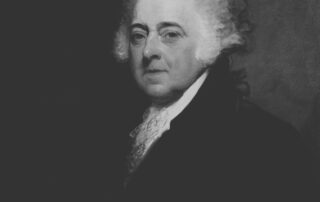
Adams and Bush Father and Son Presidencies

On a recent road trip to Arkansas and Texas I visited the presidential libraries of four contemporary presidents: Lyndon B. Johnson, George H. W. Bush, Bill Clinton, and George W. Bush.

In thinking about the two Bush presidents, I began to wonder how their backgrounds and experiences as father and son compared to the first father and son presidents: John Adams and John Quincy Adams.

Despite over 200 years of separation, you may be surprised to learn about all the things these families have in common.

Let’s begin with the obvious.  In both cases, the fathers and sons had the same first name.  John for the Adams and George for the Bushes, indicating that the sons were the first born in their immediate family.

All 4 were born in New England: 3 in Massachusetts (John Adams, John Q. Adams, and George H. W. Bush), while George W. Bush was born in Connecticut.  The Adams’s and Bushes came from wealthy, powerful New England families. After college, George H. W. Bush decided to move his family to West Texas to start an oil company, Zapata, from scratch.

John Adams and George H. W. Bush had immediate family members who were active in senior political roles. Bush’s father, Prescott, was a two term Senator from Connecticut while John Adams’s father-in-law, William Smith, was Speaker of the Massachusetts Assembly for 40 years.

Both John Adams and George H. W. Bush graduated from Ivy League schools: Harvard for Adams, Yale for Bush.  Both of their sons also graduated from Harvard. George W. Bush is the only president to date to earn an MBA.

The fathers each succeeded very popular presidents, with Adams following George Washington and Bush following Ronald Reagan.  Both fathers were also diplomats in their formative years, with Adams posted to Great Britain and Bush serving in China.  They were both best known for their expertise in foreign affairs as president.

John Adams and George H. W. Bush were directly elected to the presidency from the office of Vice President, a very rare event in our history.  They represent 2 of the 4 times this has occurred, with Thomas Jefferson and Martin Van Buren the other two to do it.

Both John Adams and George H. W. Bush were one term presidents, losing their bids for a second term to very popular men. Adams lost to Thomas Jefferson and Bush lost to Bill Clinton.  Son John Q. Adams was also a one-term president, losing to Andrew Jackson in 1828.  Among these four men, only George W. Bush served 2 terms.

Another commonality among these men is that both sons, John Q. Adams, and George W. Bush, were elected in very controversial decisions.

John Q. Adams was elected president in 1824, as the result of the referral of the vote to the House of Representatives.  His primary opponent was Andrew Jackson, along with Henry Clay and William Crawford. Although Jackson earned the most popular votes as well as the most electoral college votes, he did not win a majority.  Therefore, the election was decided by the House of Representatives who selected John Q. Adams, a decision derided by Jackson as a “corrupt bargain” between Adams and Clay. While history is a bit murky on this topic, it’s clear that Clay was the dealmaker. The tainted reality came when Adams selected Clay as his Secretary of State, then considered a steppingstone to the presidency.  One tipoff:  Adams was a compulsive diarist, yet the date he met with Clay is blank in his journal.

Many readers will recall the election of 2000 where George W. Bush defeated Al Gore. This result came about after lengthy, contested reviews of votes cast in Florida, with the Supreme Court ultimately deciding in Bush’s favor.  That election put the words ‘hanging chads’ into our lexicon forever.

Both John Adams and George H. W. Bush lived to see their sons as president, a gratifying and rare occasion for them.

History shows their 4 presidencies as consistently ranked “average”. In the latest C-Span rankings of 45 completed presidencies in 2021, they rank as follows:  15th (John Adams), 17th (John Q. Adams), 21st (George H. W. Bush), and 29th (George W. Bush). They are valued as dedicated and patriotic public servants but the first 3 of them found themselves unable to compete with clever politicians like Jefferson, Jackson, and Clinton.

I was surprised by all the ways the Adams and Bush fathers and sons have backgrounds and experiences in common.  I found it worth sharing.

Interested in learning more about the presidents? Visit the Carolyn & James Millar Presidential Gallery on the upper level of the Booth Western Art Museum. The gallery features original letters and photographs of every U.S. president. Learn more at www.boothmuseum.org.
2025-09-15T15:19:22-04:00Booth Blog|

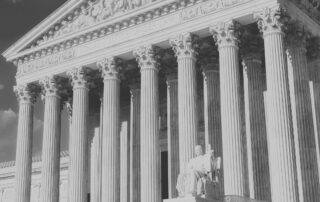
Presidents and Supreme Court Nominations

Imagine Thomas Jefferson, John Adams, and James Madison having a drink and relishing the concept of checks and balances they’d just enshrined in our founding Constitution.

“Just wait until they need a new Supreme Court Justice. They’ll have to engage all three branches of government to accomplish it. Won’t that be glorious?”

Since 1789 that “glorious” experience has been accomplished 164 times. The President (Executive Branch) makes a nomination to the Senate (Legislative Branch), which provides “advice and consent” for the Supreme Court (Judicial Branch).

The Founding Fathers also imagined this process to be relatively pure and free of political shenanigans. In that, they suffered from naivete. Right off the bat, George Washington, who had the most justices confirmed among all the presidents at 10, had one of his nominees rejected by the Senate.   James Madison, the 4th President, had one nominee rejected. Over time we’ve seen 12 rejections in all, the most recent being Ronald Reagan’s nominee Robert Bork, in 1987. George W. Bush withdrew two nominations during his two terms. Merrick Garland was nominated by Barack Obama, but no action was taken.

The make-up of the Supreme Court, as realized by the number of justices, also evolved over time and was subject to political pressures.  Our 17th President, Andrew Johnson, was so reviled that the Congress passed a law in 1866 to reduce the number of justices from 10 to 8, to prevent Johnson from nominating any replacements. After Johnson survived impeachment (by one vote) and left office in 1869, Congress passed another law to cancel the 1866 law and settle the number of justices at 9, where it’s been ever since.

All was quiet on that front until 1937. Franklin D. Roosevelt, who was 9 for 9 in getting his nominees to the court confirmed, got a firm slap from the Court over some of his New Deal laws. Roosevelt was furious and sought ways to work around the Court. He floated the idea of expanding the number of justices from 9 to 15, a move that became known as court packing.  His strategy never made it into law.

For decades, these nominations received scant attention, with 52% of them confirmed by voice vote alone. The last voice vote was for one of Lyndon Johnson’s nominees in 1965. The nature of our politics now demands a roll call vote where a Senator must cast their vote in public, thus open to accountability, criticism, and pressure.

The Senate Rules for confirmation have also been adjusted over the years. It used to require a 67% majority for confirmation. Later, it was lowered to 60%, and as of 2017, now requires only a simple majority.  Given the current polarized political environment, if the bar was 67%, it’s likely no justices would ever be confirmed, eventually breaking down our government’s judicial branch entirely.

Setting aside the political nature of these nominations, some interesting bits of trivia have accumulated over the years.

William Howard Taft is the only man who has served both as president and Supreme Court justice.  While Chief Justice Taft lobbied Congress to build the Court its own home across the street from the Capitol.  He resigned his position to retire, as many do, just prior to his death in 1930.

One other man might have accomplished Taft’s feat, had Charles Evans Hughes defeated Woodrow Wilson in 1916. Hughes resigned his seat on the Court to run for president. Later, Herbert Hoover nominated him to rejoin the Court and he did so in 1930.

Also of interest: John Marshall, our 4th Chief Justice, was nominated by John Adams. He was Thomas Jefferson’s cousin, although they were in fact political rivals.

In times of national crisis, the Chief Justice has occasionally played a significant role in resolving the issue with presumed integrity and without bias.  Earl Warren served as the head of the Warren Commission in the 1964 investigation into the assassination of John F. Kennedy.  In 1974, Warren Burger headed the Court during the Watergate crisis, supervising several milestone decisions that ultimately led to the resignation of Richard Nixon.

Lyndon Johnson nominated Thurgood Marshall as the first black on the Court in 1967. Ronald Reagan nominated Sandra Day O’Connor as the first female on the Court in 1983. Barack Obama nominated Sonia Sotomajor as the first Hispanic on the court in 2009. Joe Biden nominated Ketanji Brown Jackson as the first black female onto the Court in 2022.

In the 21st Century, given the high stakes involved, the process in the future likely will not be “glorious”.

Interested in learning more about the presidents? Visit the Carolyn & James Millar Presidential Gallery on the upper level of the Booth Western Art Museum. The gallery features original letters and photographs of every U.S. president. Learn more at www.boothmuseum.org.

2025-08-29T10:42:07-04:00Booth Blog|

Selling the Western: Movie Posters Old & New

On View July 5 – October 26, 2025
Member Opening: July 19, 2025

This exhibition will feature a range of iconic Western movie posters, Old & New, from the Booth’s permanent collection. From the beginning, promotional posters have been an essential part of the movie industry. Evolving over more than a century, movie posters are now seen as both a marketing tool and an art form, mirroring the history of cinema itself.

To register for the member opening, click HERE.

Western Costumes from the Silver Screen: The Davey Collection

On view May 10 – September 21, 2025
Member Opening: May 10, 2025

John H. Davey, a passionate collector of Hollywood memorabilia, began collecting in 1998, and has amassed an extraordinary collection of over 3,300 Hollywood-related items, including Western costumes, personal items from legendary movie stars and vintage fashion. Western Costumes from the Silver Screen: The Davey Collection focuses on the Westerns portion of his collection that helped shape Hollywood’s history. This exciting exhibition will feature a curated selection of 24 iconic pieces of clothing and accessories worn by famous actors and actresses in Western films. These rare costumes will be paired with Western movie posters, lobby cards and historical photographs, offering a fascinating glimpse into the golden era of Western cinema. The impressive range of Western costumes worn by film icons include the striped coat worn by John Wayne in “Dakota,” the green dress worn by Elizabeth Taylor in “Giant” and the leather jacket with fur collar worn by Jake Gyllenhaal in “Brokeback Mountain.”

Thank you to our Sponsors!

Don & Neva Rountree

WBHF Logo


A Monument Long in the Making

If you’ve been to Washington DC, one lasting memory is surely of The Monuments. From the Lincoln Memorial to the Washington Monument obelisk, from the FDR Memorial, to the circular Jefferson Memorial, our nation’s capital doesn’t lack for massive marble and granite remembrances of its heroes.

As you may know, a new one was dedicated in September 2020 for Dwight D. Eisenhower, an American war hero of World War II who served 2 terms in the highest office.

However, you may not know the rest of the Eisenhower Memorial story.

That “Ike” deserves a monument is indisputable.  He rose from rural Kansas to graduate West Point in the ‘class that the Stars fell on’, due to all the generals who came from that group. He did play football, and after a severe injury, was a football coach at Army.

His army career moved relatively slowly between the World Wars, but once we were attacked at Pearl Harbor, his effective leadership and political skills took him to the very top as Supreme Allied Commander and to victory in Europe.

You may recall seeing signs on our interstate highways for the Eisenhower Interstate System.  Ike had the idea for this huge network having led an army expedition across rural USA in 1919 to demonstrate the mobility of motorized army equipment. They traversed the Lincoln Highway for months, finally arriving in San Francisco, whereupon Eisenhower concluded there was a tremendous need for a network of roads that could quickly move an army in case of attack. As President, he proposed this massive network in 1956, creating thousands of jobs and igniting a booming suburban development that continues to this day.

After his stunning success in Europe, many wondered if he would follow the footsteps of so many military heroes from our past and run for President.  He wasn’t sure either, so it took nearly 8 years for him to walk into the Oval Office in January 1953.  In the interim, he served as President of Columbia University, helping the trustees raise millions for the school.

He served a full two terms as our President, succeeding Harry Truman.  Richard Nixon was his Vice President for both terms. Ike retired in 1961, passing the torch to John F. Kennedy.

Ike died in 1969, and surprisingly it took 30 years to have a memorial to this hero approved by Congress.  As they say, ‘the wheels of bureaucracy turn slowly’ in D

It then took 21 more years to get the memorial on 4 acres constructed for $150 million! Slowly turning wheels indeed.

The actual construction only took 2.5 years, light speed compared to the 30-year construction of the Washington Monument, and 8-year construction (using Georgia marble) of the Lincoln Memorial.

We now have another massive monument to a military/presidential hero in Washington. Touring these legendary places is among the highlights of any trip to DC, whether it’s your first or 101st trip. Some are most famous and easily located. Some, such as the Theodore Roosevelt Memorial, are harder to find, as it’s on an island in the Potomac River!

Plan to see the Eisenhower Memorial next time you are in DC. It’s located on the National Mall between the US Capitol and The Smithsonian.

Interested in learning more about the presidents? Visit the Carolyn & James Millar Presidential Gallery on the upper level of the Booth Western Art Museum. The gallery features original letters and photographs of every U.S. president. Learn more at www.boothmuseum.org.

2025-08-18T15:27:40-04:00Booth Blog|

Presidents in Retirement: Richer or Poorer?

So, you’ve been President of the United States.  How do you do earn a living after having the most powerful job on earth?

The answer isn’t as straightforward as you might think.  In the majority of cases, it’s not at all realistic for them to return to the occupation they held prior to the presidency.  For example, Dwight Eisenhower couldn’t just resume his Army career after his two-term presidency.

The level of poverty some of the founding presidents experienced can be surprising: both James Monroe and Thomas Jefferson were ‘land rich and cash poor’. Monroe was eventually forced to move to New York to live with his daughter in 1831. Jefferson had to sell his book collection to the Library of Congress to raise cash.

Prior to 1958 presidents received no pension. In fact, the spectacle of a former president going broke, as Harry Truman experienced, was the catalyst to passing a law granting pensions to ex-presidents to protect the ‘dignity of the office’.

But didn’t they make great money while they were president?  Not really. Congress sets the salary and benefits for the president. It’s been changed only 5 times in our 235-year history.  George Washington made $25,000 a year as president. Bill Clinton made $200,000 in 1998. Joe Biden earns $400,000 a year. In modern times, that’s not a lot of money when compared to athletes, entertainers, and CEOs.

Yes, former presidents get a pension now: $210,700 per year, same as a working cabinet member. Plus, Secret Service protection for life, office expenses, etc.

So what did they do to make a living? Starting in the 20th century, presidents mostly made money by writing books and giving speeches. Doing much more was considered ‘undignified’; it wasn’t appropriate to ‘cash in’ on the office.

All that changed in a big way with Gerald Ford.

Ford was a 25-year member of Congress who ascended to the Vice Presidency when Spiro Agnew was forced from office for criminal conduct. Richard Nixon, embroiled in the Watergate Affair, needed Ford for his squeaky-clean image and ease of gaining Senate approval. Months later, Nixon resigned, elevating Ford to the presidency.  Ford spent 30 months in office, losing to Jimmy Carter in 1976.

Gerald Ford wasn’t wealthy, but he did want financial security.

His first decision was to endorse a collection of medals depicting 100 significant events in presidential history. At the time he accepted the endorsement fee, he said: “I feel totally justified in doing it.”

But that was just the beginning. Ford became a hot commodity, sought after for positions on corporate boards of directors, consulting contracts, plus the usual book deals and speeches.

In a two-year period, he joined 8 different boards, many of which also came with lucrative consulting contracts. He claimed to refuse many who approached him and did not join any defense contractor boards. In 1986 he earned over $500,000 from these board seats, made 30 speeches at $15,000 a pop, and took in his pension of $153,000.

While other living ex-presidents such as Carter and Nixon stuck to writing books and refused all offers of board seats, Ford claimed a ‘clear conscience’ in pursuing these opportunities. He broke the mold and set the precedent for future presidents to follow similar paths.

Today, ex-presidents such as Bill Clinton and Barack Obama earn tens of millions of dollars on book deals alone.  Clinton went heavy on the speaker’s circuit, earning $200,000 a speech, making many millions each year. Ronald Reagan made $2 million for one speech and visit to Japan just 10 months after his retirement.

To be fair, Ford and most former presidents such as Jimmy Carter, George H.W. Bush, Bill Clinton, and George W. Bush also support charities and global relief efforts with their time and influence. But it seems our media – driven, pop culture world can’t get enough of these men, no matter their political party.  They’ve reached the pinnacle of influence and are able to command deals that might make our Founding Fathers scratch their collective heads as to the financial heights the presidency can lift a man.

The olden days of retiring to a quiet life of leisure seems quaint now. Gerald Ford broke down those walls with a path – clearing clarity for his successors to follow. Safe to say, our ex-presidents no longer worry about paying the bills.  They just have to worry about being perceived as greedy and foregoing the ‘dignity of the office’.

Interested in learning more about the presidents? Visit the Carolyn & James Millar Presidential Gallery on the upper level of the Booth Western Art Museum. The gallery features original letters and photographs of every U.S. president. Learn more at www.boothmuseum.org.

2025-08-04T15:27:51-04:00Booth Blog|

Violins to Harmonicas: Presidents Who Could Play

When I think of the presidents and music, my mind drifts from the elegance of Pablo Casals’ cello performance at the Kennedy White House in 1961 to boisterous convention halls playing John Philip Sousa marches.

Yet, a select few of our presidents have been musicians of the first order, able to play and be recognized for their skills.

Let’s examine them in roughly chronological order.

Thomas Jefferson was a virtuoso violinist whose skills helped him win the hand of Martha Skelton in marriage. Her other suitors backed away once Jefferson serenaded Martha on his violin.  He also played cello and clavichord.

John Quincy Adams our 6th President, was an accomplished flutist who wrote his own compositions while attending Harvard University.

Our 9th President, John Tyler, who ascended to the presidency after the death of William Henry Harrison, trained from an early age to become a concert violinist. His father pressured him to become a lawyer instead, so Tyler dropped his professional musical aspirations. After his term in office, he often played with his second wife Julia, an accomplished guitarist, to entertain their guests.

Abraham Lincoln and Woodrow Wilson also played violin after their oval office hours. Calvin Coolidge and Ronald Reagan played harmonica.  Coolidge’s Vice President, Charles Dawes, wrote the later-to-be-famous song All in The Game.  Gilded Age president Chester Arthur played the banjo.

Warren Harding played multiple instruments too, famously playing the tuba at the 1920 Republican Convention to celebrate winning the nomination for president.

Both Harry Truman and Richard Nixon were accomplished pianists, honing their skills from an early age. However, this common talent was at the center of a feud that lasted over a decade.

Nixon, who wrote Concerto #1 of his own at an early age, also played violin, saxophone, clarinet, and accordion.  He ran for Vice President on the 1952 Republican ticket with Dwight Eisenhower, becoming the aggressive attacker of then sitting President Harry Truman.

Truman, a Democrat, also trained on the piano from an early age, and famously played as a politician, once with movie star Lauren Bacall sitting atop the piano.

Harry Truman never took kindly to criticism.  He didn’t like all the accusations tossed toward his administration by Richard Nixon during the 1952 campaign. It’s clear he held a grudge against Nixon long after he left the White House and Eisenhower/Nixon took over.

The feud spilled out in public in 1958 when Harry refused in advance to play a duet with Nixon at the National Press Club in Washington.

In 1969, as president, Nixon tried to mend fences with Truman, donating the piano Truman played at the White House for use at his retirement home in Independence Missouri.  Nixon played the Missouri Waltz for Harry and Bess, but Truman stood by stone faced and unwilling to smile for the cameras, holding onto that grudge.

Nixon went on to set new standards for White House public entertainment by playing piano to accompany singer Pearl Bailey and duets with Duke Ellington.

In modern times, Bill Clinton’s saxophone-playing appearance on the Arsenio Hall Show in 1992 may have been a turning point in that campaign against George H. W. Bush. He played Elvis Presley’s Heartbreak Hotel wearing sunglasses and won over the hearts and minds of many younger and minority voters. Once in office, Clinton had a special music room set up at the White House so he could play at any time.

Lastly, although he did not play an instrument, Barack Obama was a pretty good singer, crooning to Sweet Home Chicago and Let’s Stay Together.

Altogether, 13 of our 46 presidents have had legitimate musical skills, helping us flesh out more of their backgrounds and bringing them to life.

Interested in learning more about the presidents? Visit the Carolyn & James Millar Presidential Gallery on the upper level of the Booth Western Art Museum. The gallery features original letters and photographs of every U.S. president. Learn more at www.boothmuseum.org.

2025-07-14T13:03:44-04:00Booth Blog|

Western Focus: Collecting Photography 2017 – 2025

Through July 13, 2025
Member Opening: January 25

The Booth Museum began collecting photographs in the early 2000s, but the permanent collection and gallery were not formally established until 2017. Today, the museum has over 900 photographs, dating from the nineteenth century to the present. This retrospective will survey the Booth’s photography collecting activity and includes an eclectic array of historical and contemporary imagery by over forty photographers. The art ranges from antique images to contemporary mural-sized panoramas. Together, these images vividly depict the essence of the American West.


Presidents in Command of Foreign Languages

How has the ability to speak in foreign languages evolved over the history of the American presidency? Of our 46 presidents, 21 could speak at least one language other than English. But the overall linguistic trend may be the opposite of what you think.

Many of our first presidents had command of multiple languages, reading, writing, and conversing in French, German, Latin, Greek, Italian, Hebrew, and Dutch.

This fluency among our early presidents came from two primary factors. First, 17th century studies placed great emphasis on the classical languages of Latin and Greek. The other factor involved government assignments in foreign capitals.  John Adams, Thomas Jefferson, James Monroe, and John Quincy Adams all represented our country on foreign soil in multi-year assignments, allowing them significant exposure to the local language.

John Quincy Adams could speak seven languages, four fluently (French, Dutch, Latin and German), and three partially (Russian, Greek, and Italian).  He prided himself on gaining and maintaining fluency, rising early in the morning to translate one page of English to the language he wished to master.

Thomas Jefferson could speak five languages, 3 fluently (French, Latin and Italian), and 2 partially (Greek and Spanish).  It’s said that he picked up Spanish on a 19-day crossing of the Atlantic by reading a primer and Don Quixote.

In the 19th and early 20th centuries, many of the presidents could speak at least one foreign language. Theodore and Franklin Roosevelt could each speak three. Each of them gained their fluency in German and French due to their tutoring by governesses imported for the task, or from extended travels with their families.

But interestingly, as the 20th century rolled on, fewer and fewer presidents could speak a language other than English.

Only one of our most recent ten presidents could speak one: Bill Clinton could do a passable German. The other nine recent presidents either spoke no foreign language or could only partially do so. George W. Bush and Jimmy Carter made stabs at Spanish, and Barack Obama knew a few phrases of Indonesian from his early years.

What is the root cause of this trend? One would think that, given our modern globally connected world, being able to converse in foreign languages would be helpful, and that such skills would have become more relevant than ever in the 21st century, right?

Not so much. Since 1900 the world has evolved with the acceleration of English as the dominant language in many forums, allowing our modern presidents to focus their energies less on learning and maintaining foreign language skills, and more on building their skills in economics and world affairs. In an increasingly connected world, English has assumed a position as the dominant language of global communication, and presidents are part of that trend.

That said, there have been some memorable situations or public displays of presidents using foreign languages over the years.

Herbert Hoover was fluent in Latin and Mandarin Chinese. He and his wife Lou painstakingly translated a classic mining text from Latin to English so he could benefit in his early, very successful mining career.  Later, after working for the Chinese Emperor on a mining contract and getting caught in the Boxer Rebellion, Hoover and Lou would frequently speak to each other in Chinese when they didn’t want others around them to eavesdrop on their conversations.

One of the most famous presidential speeches involving purposeful use of foreign phrases was given by one of the presidents who could not speak a foreign language at all. In 1963, John F. Kennedy spoke to a massive crowd of 120,000 in Berlin. At the height of the Cold War, he delivered an eloquent speech aimed at both the Germans before him and the Russians listening in. He said “Ich bin Ein Berliner!”, meaning “I am a Berliner!”.  Some say it was his best speech, powerfully providing inspiration to a city torn in half by the Berlin Wall.

As noted, Bill Clinton spoke German. As president, in 1994 he too had an opportunity to address a large crowd at the Brandenburg Gate in Berlin. Like Kennedy, he sprinkled his speech with German phrases, much to the joy of the German people.

The trend away from fluency in foreign language among our presidents is now well established. In the future, it’s unlikely we’ll see presidents conversing with foreign leaders, their constituents, or others in any language other than English.

Interested in learning more about the presidents? Visit the Carolyn & James Millar Presidential Gallery on the upper level of the Booth Western Art Museum. The gallery features original letters and photographs of every U.S. president. Learn more at www.boothmuseum.org.

2025-06-30T15:58:50-04:00Booth Blog|

Food, Glorious Food

Just the words ‘comfort food’ brings to mind delicious pleasures that can take you far away from stressful days.

Of course, presidents are just like us in that way.  Everyone has their go to ‘comfort food’, the one thing you like to eat while lowering the stresses of a busy life.  And presidents live in a pressure cooker, so the need for a favorite food can go a long way to reducing some of that massive stress.

Wouldn’t you like to know those favorite foods of our presidents?  You may be surprised, or shake your head at some of them, but there are some easy to see revelations into their personalities too.

Some of these favorites have become so well known that it’s become part of their identity. Think Ronald Reagan and his jellybeans.

One president has received credit for the creation of one of America’s all time go to comfort foods.  Thomas Jefferson spent years in France while representing our country.  He loved French foods and wines.  Once back home, he took some culinary ideas from his experiences and created what we now call Mac & Cheese!

Just thinking about a warm side of Mac & Cheese makes me hungry!

George H. W. Bush was more famous for a food he hated, than for his actual favorite.  He loved his pork rinds but very publicly hated broccoli.

Naturally, there is some regional appeal for certain foods, depending on where the man grew up. No surprise that John F. Kennedy loved New England clam chowder, or that Jimmy Carter loves grits.

Some presidents have used food as an insult while engaging in political bullying.  In 1897, Theodore Roosevelt was serving in the William McKinley administration as Assistant Secretary of the Navy.  Roosevelt was a vocal advocate of naval preparedness, most immediately for a possible war with Spain.  Mr. McKinley, a Civil War veteran, was slow to push for war.  Roosevelt famously insulted him by saying “he has no more backbone than a chocolate éclair”.  4 years later, after gaining fame in the Spanish-American War for his charge up San Juan Hill, Roosevelt succeeded to the presidency following McKinley’s assassination in Buffalo New York.

Some president’s favorites are from the sweet tooth category. Dwight Eisenhower loved fudge, James Madison preferred ice cream, and Zachary Taylor loved beignets.

Others would be considered odd by today’s standards. For example, William Henry Harrison and James Garfield both liked squirrel as a stew or soup.  Andrew Jackson loved “leather britches”, a regional name for green beans and bacon.

The idea of comfort food in more modern times may be best illustrated by Franklin D. Roosevelt’s love of grilled cheese sandwiches or Barack Obama’s preference for nachos.   FDR went further by serving hot dogs to the King of England during a state visit to Hyde Park. The president who gets the prize for most nutritious favorite is John Quincy Adams who loved fresh fruits.  And for the weirdest favorite, I must award that distinction to Richard Nixon for his cottage cheese and ketchup habit.

Finally, we cannot complete our presidential food journey without mentioning William Howard Taft. It seems we all know that Big Bill was our largest president, tipping the scale at 330 pounds during his presidency.  So, a natural question becomes: what was his go to comfort food?  He loved steak and potatoes and ate heartily.  For him, unhappy as president, eating was his way to off load stress. After his term ended, he shed over 80 pounds, serving later as Supreme Court Chief Justice in a trimmer form.

What about our current president?  Joe Biden’s favorite is pasta with red sauce, specifically angel hair pomodoro.

Interested in learning more about the presidents? Visit the Carolyn & James Millar Presidential Gallery on the upper level of the Booth Western Art Museum. The gallery features original letters and photographs of every U.S. president. Learn more at www.boothmuseum.org.
2025-06-16T12:52:13-04:00Booth Blog|
Go to Top