Written by Chris Binkert
Franklin Roosevelt and Grover Cleveland did it the most. Andrew Johnson tried to do it but was rejected half the time. Seven presidents never did it at all. What are we talking about?
The veto.
This potent power is granted to the president by the Constitution as part of the checks and balances designed to keep one branch of government from becoming too dominant. When a president doesn’t like a piece of legislation presented by the Congress for signature, the president can do one of three things within ten days (Sundays excepted): sign it into law, veto it and return it to the Congress with the reasons for the veto, or, if Congress adjourns within the ten day period, use the ‘pocket veto’ where they neither sign it nor return it, declining to make it a law and effectively killing the bill without actually vetoing it.
Congress has the power to override a veto if two-thirds of members vote to do so. Once overridden, it becomes law.
A Handy Tool
How often has the veto been exercised? To date, 2,590 times, or on average, roughly once a month since the Constitution was ratified in 1789. 1,066 of these were pocket vetoes.
How often has a veto been overridden? 112 times, or just four percent of the vetoes.
Since Franklin Roosevelt was president for 12 years, he had the most vetoes, at 635, only nine of which were overridden. In his eight years as president, Grover Cleveland had 584 vetoes, seven of which were overridden. The unlikeliness of a veto being overridden has made it a powerful tool in the president’s toolkit.
The Veto in Action
George Washington was the first to use the veto in 1792, rejecting an appropriation bill that he felt was unconstitutional. The earliest presidents took many cues from Washington, and use of the veto was one of the cues they followed: John Adams, Thomas Jefferson, and John Quincy Adams didn’t use the veto at all, since they reserved it for bills they deemed to be unconstitutional (and there were none).
All that changed under Andrew Jackson (1829-1837). Jackson vetoed more bills in his two terms than all the previous presidents combined. Most famously, he vetoed the bill to charter a national bank, which he considered unconstitutional.
The first override of a veto happened in 1845 when Congress rejected President John Tyler’s veto of a bill funding the coast guard. Tyler was very unpopular and had a prickly personality, giving Congress motivation to reject his veto.
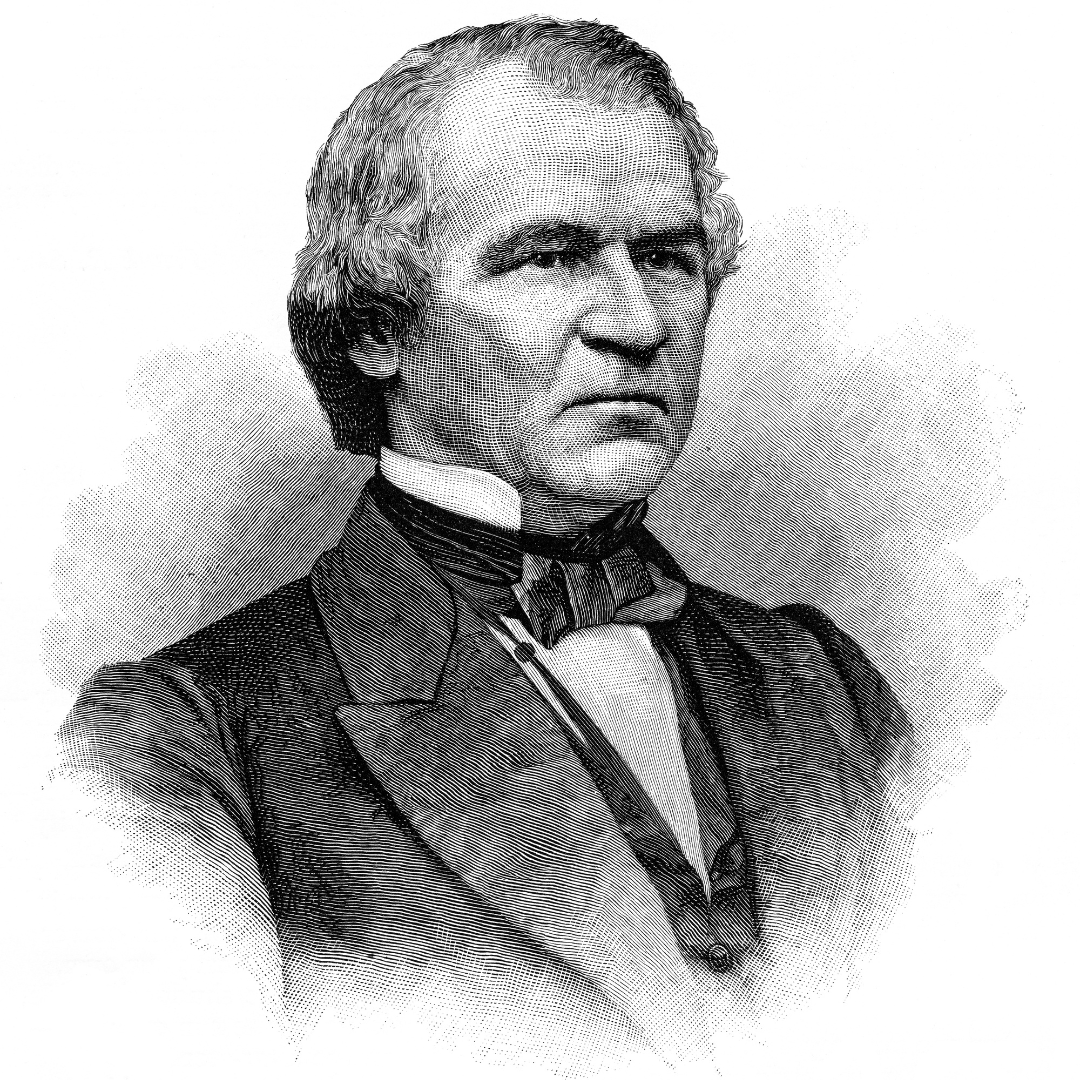
In a similar but more dramatic way, President Andrew Johnson, successor to the assassinated Abraham Lincoln, was a hated man, resulting in 52% of his vetoes being overridden. One of those vetoes, concerning the Tenure of Office Act, led directly to his impeachment in 1868. He escaped conviction by the Senate by one vote and avoided being removed from office.
The veto played a role during the difficult Reconstruction period following the Civil War. For example, Andrew Johnson vetoed a bill admitting Nebraska to the Union in 1866. Congress sent him a nearly identical bill in 1867 seeking Nebraska’s admission. Johnson once more vetoed it, asserting that Congress did not have the right to force Nebraska to give blacks the right to vote. This time he was overridden, making Nebraska the 37th state.
In more recent times, vetoes have created some unusual circumstances for presidents. In 1972, Richard Nixon vetoed the Clean Water Act, despite his creation of the Environmental Protection Agency in 1970. He pursued that inconsistency because the proposed law was, in his opinion, just too expensive. His veto was overridden.
Jimmy Carter suffered humiliation in 1980 as a consequence of his veto of a veteran’s healthcare bill due to its provision of $80 million per year to VA physicians in bonuses. Carter would have preferred that the money go to veterans instead. The veto was unanimously overridden by the Senate, and nearly unanimously overridden by the House of Representatives as well.
In 2000, Bill Clinton vetoed the Death Tax Elimination Act, part of an estate tax overhaul undertaken by Congress. He rejected it because, in his opinion, it would only benefit about 3,000 very wealthy families. Congress could not muster enough votes to override his veto.
Finally, in 2006, George W. Bush vetoed the Stem Cell Research Bill, which would have lifted restrictions on human embryonic stem cell research. Bush said he “would not allow the nation to cross this moral line.” In 2009, seven weeks into his presidency, Barack Obama reversed the Bush veto by Executive Order, allowing such research to proceed with restrictions.
The checks and balances embedded in the Constitution can be a blessing or a curse, depending on which side you are on. For me, the ability to wield the veto is one of the most powerful tools a president has, even if it’s only threatened.
Interested in learning more about the presidents? Visit the Carolyn & James Millar Presidential Gallery on the upper level of the Booth Western Art Museum. The gallery features original letters and photographs of every U.S. president. Learn more at www.boothmuseum.org.