The Lucky Ones
The gun didn’t fire. The shot missed. A bystander grabbed their arm. The wound wasn’t fatal.
Thomas Jefferson once said, “I’m a great believer in luck” — and lucky for him no one ever fired a shot his way. But you may be surprised to know there have been over 30 attempts to assassinate US presidents plus many other incidents in which they narrowly avoided death, usually through pure, blind luck.
Let’s work through some of these lucky presidents in chronological order.
In 1835, Andrew Jackson had ‘double luck’ when a house painter armed with two pistols tried to shoot him at close range. Both guns misfired and Jackson beat him severely with his cane.
In 1844, John Tyler was aboard the Princeton with a crowd of hundreds to observe the firing of a new 27,000-pound cannon called The Peacemaker. In awe he watched the thunderous weapon fire twice, then moved below deck for a celebratory lunch. The third firing caused a catastrophic explosion, killing several people including two cabinet members. It was a lucky lunch for Tyler.
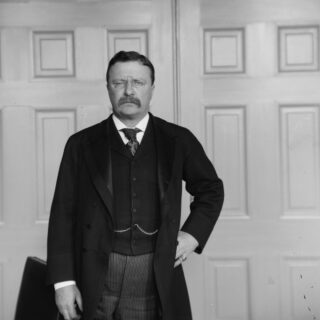
With William McKinley’s assassination in 1901, the Secret Service’s mission was broadened from pursuing counterfeiters to include round-the-clock protection of the president. Theodore Roosevelt was the first to receive this protection, and none too soon.
Roosevelt was riding to an event in an open carriage in Pittsfield Massachusetts when a runaway rail trolley slammed into it at high speed throwing Roosevelt from the carriage face down in the mud. The Secret Service Agent who had been riding with him was thrown under the trolley and killed instantly. Days later, Roosevelt needed surgery to treat his gashed and infected leg.
That wouldn’t be the last lucky break for Theodore Roosevelt. In 1912, while running for President from the Bull Moose Party, he was shot in the chest by a saloon keeper, but his folded 50-page speech plus his glasses case in his breast pocket slowed the bullet, causing only a flesh wound. The attempt on his life didn’t stop Roosevelt from making his 84-minute speech, saying “It takes more than that to stop a bull moose!”
Many people know that Franklin Roosevelt was elected four times, but few know that he escaped assassination as President Elect before ever taking office. He was in Miami in an open car in 1933 when Italian immigrant Giuseppe Zangara fired five shots. None hit Roosevelt, but the Mayor of Chicago was mortally wounded. How might history have been different if FDR had never become President?
FDR’s successor, Harry Truman, had his own date with lady luck right across the street from the White House. Living at Blair House while the White House was renovated, Truman’s life was directly threatened by two Puerto Rican pro-independence activists. They stormed the front door with guns blazing. One Secret Service Agent was mortally wounded but killed one assassin before dying. The other man was wounded and stopped. Truman himself was in his second-floor street side bedroom, and heard it all, but was unharmed.
Gerald Ford escaped two assassination attempts within two weeks of each other in California in 1975. In the first attempt, a follower of Charles Manson named Lynette Fromme was lined up to shake Ford’s hand, but, her gun, which had four rounds in the magazine, but none in the chamber, did not fire and she was stopped by the Secret Service. The second attempt was foiled by a bystander who grabbed the arm of the assailant, Mary Jane Moore. The bullet missed Ford and hit the side of the hotel he was exiting.
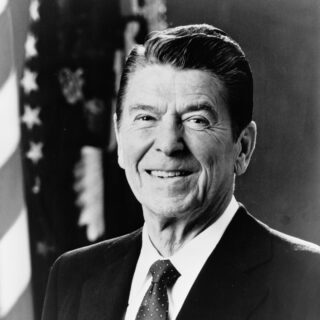
In 1981, Ronald Reagan was attacked as he exited a Washington hotel. John Hinckley fired six rounds at Reagan. Only one hit the president, ricocheting off his limousine and striking his chest. He was quickly thrown into the limo, which roared away. Agent Jerry Parr saved his life by inspecting Reagan for injury and seeing blood, directed the driver to not return to the White House but to go to the hospital instead. Reagan the movie star quipped that he hoped all the doctors were Republicans, but in truth, he very nearly died.
Most recently, Donald Trump, running for re-election in 2024, survived an attempt on his life by turning his head, causing the bullet to merely graze his ear.
Some say that luck is what happens when preparation meets opportunity. The Secret Service and their meticulous preparation deserve much credit for paving the way for better ‘luck’ against the odds, although they too have failed at times. As a related factor, one questions why it took until 1967 to approve an amendment to the Constitution that guides the replacement of a vacant vice presidency, or what to do if a president is incapacitated.
Interested in learning more about the presidents? Visit the Carolyn & James Millar Presidential Gallery on the upper level of the Booth Western Art Museum. The gallery features original letters and photographs of every U.S. president. Learn more at www.boothmuseum.org.