Snowball fights with cotton balls. Nutcracker Suite-themed rooms. Custom Hallmark-designed cards. You won’t be surprised to hear that U. S. Presidents have celebrated Christmas in elaborate ways. Here are some examples.
Official Duties
Christmas officially kicked off in 1870 when President Ulysses S. Grant signed legislation making Christmas a legal holiday.
Calvin Coolidge might hold the title of Presidential Father of Christmas. He started the tradition of having a national Christmas tree in 1923 with a display of a tree from his home state of Vermont. Calvin and First Lady Grace Coolidge pressed the button to light the tree on the Ellipse across from the White House.
Coolidge also named a giant sequoia in California as ‘the nation’s Christmas tree’. Appropriately the tree is named after President Ulysses S. Grant.
Coolidge was also the first president to give a Christmas Greeting to all Americans, having a letter of greeting published in most newspapers on Christmas Day, 1927.
Since the Eisenhower administration in the 1950’s, the First Lady has supervised the decoration of the White House. Mamie Eisenhower had 26 trees put up in the White House. Laura Bush had 49 trees put up, and in 2018 Melania Trump put up 81 trees and topiaries.
Historically, the official White House Christmas tree is set up in the Blue Room. William H. Taft and First Lady Helen began the tradition in 1912. In 1961, First Lady Jackie Kennedy took the Blue Room tree to a new level by creating a theme for the decorations. Her first one was based on the Nutcracker Suite ballet. Most subsequent Blue Room trees have also been themed.
The concept of Christmas cards is a 19th century invention that didn’t catch on with the presidents until much later. In 1953, Dwight and Mamie Eisenhower decided to make the sending of cards a more personal activity. Dwight Eisenhower was an amateur artist who decided to paint an image of Abraham Lincoln for his 1953 Christmas card, enlisting Joyce C. Hall, CEO of Hallmark, to design and print 1,100 cards. In 1954, he did one with George Washington as his subject. As a sure sign of holiday growth, Ronald Reagan sent 125,000 cards in 1988.
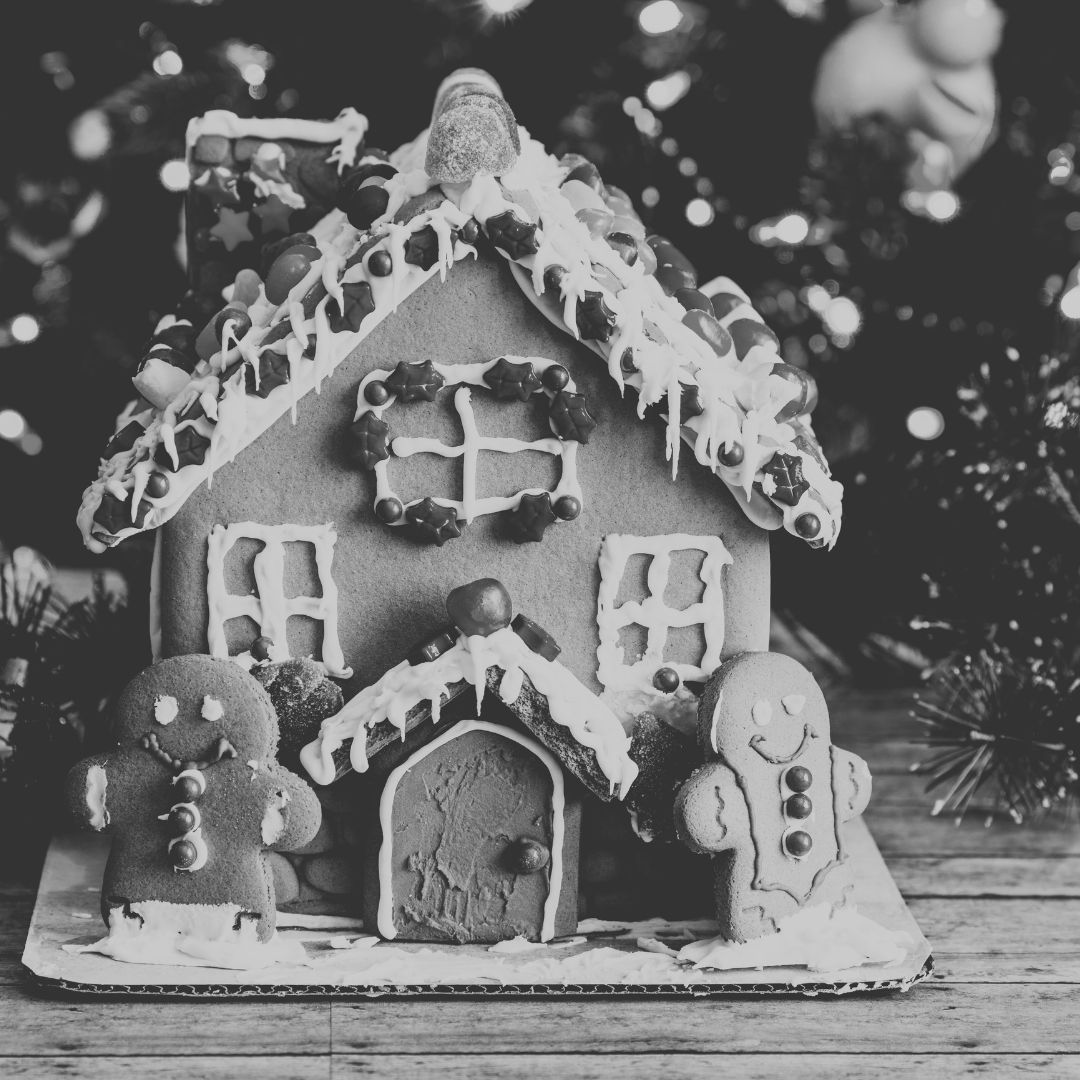
Another White House Christmas tradition started in 1969 during the presidency of Richard Nixon. His First Lady, Patricia, worked with the assistant White House Chef, Hans Raffert, to create the first gingerbread house. Every subsequent year has seen a White House Christmas gingerbread house, most of them more elaborate than before. The Clinton’s chef spent 150 hours creating the gingerbread house one year in the 1990’s.
Family Time
Once the official duties end, each president goes their own way to enjoy the holidays. Most engage in family get-togethers and religious observances, sometimes wrapped around a vacation.
Some presidents prefer to travel home to gather their families and relax in a familiar setting. Lyndon B. Johnson went to his Texas ranch. Richard Nixon and Ronald Reagan flew home to California. Jimmy Carter returned to Plains.
Other presidents like to use Camp David (named for Eisenhower’s grandson), a quick 30- minute helicopter ride from the White House. Presidents George H.W. Bush and son George W. Bush spent 12 Christmases at Camp David.
Those who preferred a vacation-style holiday include Barack Obama, who went to Hawaii, his birth state. Gerald Ford went to Vail, Colorado for skiing vacations.
Franklin D. Roosevelt had a personal touch for his family each Christmas, reading Charles Dickens’s classic A Christmas Carol to his gathered family.
What would the holidays be without the food? Presidents of course have their favorite dishes, including Benjamin Harrison’s love of fig pudding, Abraham Lincoln’s love of gingerbread, and Dwight Eisenhower’s favored ‘million dollar fudge’.
Which president hosted a children’s Christmas party with the snowball fight with cotton balls? None other than Andrew Jackson in 1835.
Presidential Christmases have evolved from quiet personal celebrations to robust national events where every ornament, greeting card and event are examined in detail for appropriateness and political impact.
Interested in learning more about the presidents? Visit the Carolyn & James Millar Presidential Gallery on the upper level of the Booth Western Art Museum. The gallery features original letters and photographs of every U.S. president. Learn more at www.boothmuseum.org.