Booth Marketing 2

About cowboy

This author has not yet filled in any details.
So far cowboy has created 32 blog entries.

History of Art of the American West with Georgia Highlands College

Thursday, June 20 – Thursday, August, 22

Embark on a captivating exploration of the rich and diverse artistic heritage of the American West in this engaging class. Led by Seth M. Hopkins, Executive Director of the Booth Western Art Museum, participants will dive into the evolution of Western art over eight non-consecutive Thursday nights, beginning June 20th. Co-sponsored by the Booth Western Art Museum and Georgia Highlands College Continuing and Professional Education Department, this educational journey promises to inspire and enlighten art enthusiasts of all levels.

Session 1 – Earliest images of the West: works by the earliest arts in the West will be viewed within the context of American art of the time; includes artists George Catlin, Karl Bodmer, Alfred Jacob Miller and John Mix Stanley, plus the Hudson River School first generation

Session 2 – Landscapes of the West: panoramic views of the West will be discussed within the context of American art of the time, including a post Civil War shift in Western art, away from Native American subjects to the land itself, includes artists Albert Bierstadt, Thomas Moran and others, Hudson River School second generation

Session 3 – Remington, Russell and Friends: as early as the 1890s artists are looking back to a West that was, nostalgia becomes an important subject, looking at art by Frederic Remington and Charles M. Russell and their peers like W.R. Leigh, N.C. Wyeth and many others

Session 4 – Taos and Santa Fe Art Colonies: The Taos Society of Artists formed in the 1910s to promote the work of the members to museums and collectors, and bolster the markets for their work, twenty years later they had achieved most of their goals and no longer seemed necessary

Session 5 – The Cowboy Artists of America and Peers:  The founding of the CAA in 1965 helps lead to an increased interest in traditional style art in the contemporary period, includes the four artists who founded the group, plus standouts like John Clymer, Frank McCarthy, Howard Terpning and Martin Grelle

Session 6 – The Miracles from IAIA:  The early faculty and graduates from this school, founded in Santa Fe in 1962, help lead to an increased interest in Indigenous art in the contemporary period which stretches beyond the Native artists to others portraying the West in modern ways like Thom Ross, Kim Wiggins, Donna Howell-Sickles and Billy Schenck

Session 7 – Sculpture: Throughout the course most of the emphasis has been on paintings, during this session we full turn our attention to three dimensional art, and artists like James Earle Fraser, Phiminster Proctor, Frederic Remington, Harry Jackson, Allan Houser and John Coleman.

Session 8 – Photography: Throughout the course most of the emphasis has been on paintings, during this session we full turn our attention to photography, and investigate how the desire to shoot in the West drove much of the technical improvements made in the field, artists include Edward Curtis, Ansel Adams, Dorthea Lange, Imogene Cunningham, the Weston’s, Jay Dusard and Barbara van Cleev

The Lucky Ones

The gun didn’t fire.  The shot missed. A bystander grabbed their arm. The wound wasn’t fatal.

Thomas Jefferson once said, “I’m a great believer in luck” — and lucky for him no one ever fired a shot his way. But you may be surprised to know there have been over 30 attempts to assassinate US presidents plus many other incidents in which they narrowly avoided death, usually through pure, blind luck.

Let’s work through some of these lucky presidents in chronological order.

In 1835, Andrew Jackson had ‘double luck’ when a house painter armed with two pistols tried to shoot him at close range. Both guns misfired and Jackson beat him severely with his cane.

In 1844, John Tyler was aboard the Princeton with a crowd of hundreds to observe the firing of a new 27,000-pound cannon called The Peacemaker. In awe he watched the thunderous weapon fire twice, then moved below deck for a celebratory lunch.  The third firing caused a catastrophic explosion, killing several people including two cabinet members.  It was a lucky lunch for Tyler.

With William McKinley’s assassination in 1901, the Secret Service’s mission was broadened from pursuing counterfeiters to include round-the-clock protection of the president.  Theodore Roosevelt was the first to receive this protection, and none too soon.

Roosevelt was riding to an event in an open carriage in Pittsfield Massachusetts when a runaway rail trolley slammed into it at high speed throwing Roosevelt from the carriage face down in the mud. The Secret Service Agent who had been riding with him was thrown under the trolley and killed instantly.  Days later, Roosevelt needed surgery to treat his gashed and infected leg.

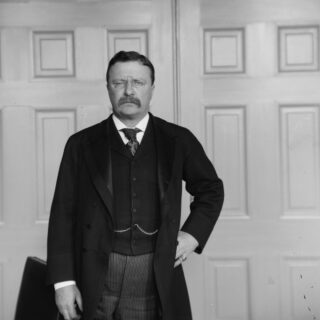
That wouldn’t be the last lucky break for Theodore Roosevelt. In 1912, while running for President from the Bull Moose Party, he was shot in the chest by a saloon keeper, but his folded 50-page speech plus his glasses case in his breast pocket slowed the bullet, causing only a flesh wound. The attempt on his life didn’t stop Roosevelt from making his 84-minute speech, saying “It takes more than that to stop a bull moose!”

Many people know that Franklin Roosevelt was elected four times, but few know that he escaped assassination as President Elect before ever taking office.  He was in Miami in an open car in 1933 when Italian immigrant Giuseppe Zangara fired five shots. None hit Roosevelt, but the Mayor of Chicago was mortally wounded.  How might history have been different if FDR had never become President?

FDR’s successor, Harry Truman, had his own date with lady luck right across the street from the White House. Living at Blair House while the White House was renovated, Truman’s life was directly threatened by two Puerto Rican pro-independence activists. They stormed the front door with guns blazing. One Secret Service Agent was mortally wounded but killed one assassin before dying. The other man was wounded and stopped. Truman himself was in his second-floor street side bedroom, and heard it all, but was unharmed.

Gerald Ford escaped two assassination attempts within two weeks of each other in California in 1975. In the first attempt, a follower of Charles Manson named Lynette Fromme was lined up to shake Ford’s hand, but, her gun, which had four rounds in the magazine, but none in the chamber, did not fire and she was stopped by the Secret Service.  The second attempt was foiled by a bystander who grabbed the arm of the assailant, Mary Jane Moore.  The bullet missed Ford and hit the side of the hotel he was exiting.

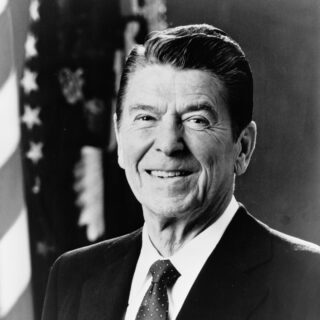
In 1981, Ronald Reagan was attacked as he exited a Washington hotel. John Hinckley fired six rounds at Reagan. Only one hit the president, ricocheting off his limousine and striking his chest. He was quickly thrown into the limo, which roared away.  Agent Jerry Parr saved his life by inspecting Reagan for injury and seeing blood, directed the driver to not return to the White House but to go to the hospital instead.  Reagan the movie star quipped that he hoped all the doctors were Republicans, but in truth, he very nearly died.

Most recently, Donald Trump, running for re-election in 2024, survived an attempt on his life by turning his head, causing the bullet to merely graze his ear.

Some say that luck is what happens when preparation meets opportunity.  The Secret Service and their meticulous preparation deserve much credit for paving the way for better ‘luck’ against the odds, although they too have failed at times. As a related factor, one questions why it took until 1967 to approve an amendment to the Constitution that guides the replacement of a vacant vice presidency, or what to do if a president is incapacitated.

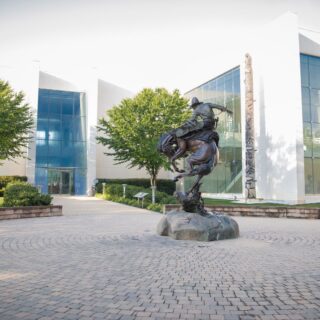
Interested in learning more about the presidents? Visit the Carolyn & James Millar Presidential Gallery on the upper level of the Booth Western Art Museum. The gallery features original letters and photographs of every U.S. president. Learn more at www.boothmuseum.org.
2024-08-26T15:04:35-04:00Booth Blog|

The Bully Pulpit Saved College Football

In the late 19th century, college football was nothing like the game we know today. There were 15-20 men on a side. Equipment was primitive. Mass motion plays, called the Flying Wedge, were popular and violent. Gang tackling, late hits, gouging eyes, and breaking bones were common—and encouraged. Good players were targeted for injury to force them out of the game. Schools routinely brought in ‘ringers’—older, faster, non-student players—to assure their dominance. Incredibly, 330 players died from 1890-1905, a period of just fifteen years.

In 1897 a University of Georgia player died on the field due to multiple concussions inflicted by the University of Virginia team. That was it. Georgia, Georgia Tech, and Mercer suspended their football programs. Harvard was contemplating withdrawing from the sport entirely. Other football powerhouse schools like Yale, Princeton, and Stanford were on the brink, too.

Only one man could save the game from itself: President Theodore Roosevelt. While he had never played football, he was a big supporter of it and wanted to see it survive and thrive. He was a believer in ‘the strenuous life’, pushing yourself and your body to develop manly traits and learn teamwork. His two sons were playing football at the time (and getting injured).

By 1905, President Roosevelt had already extended the power of the presidency to new heights, partly by exploiting what he called the Bully Pulpit. In his unique way, he was able to speak out on a social issue of his choosing and sway public opinion that went beyond executive orders or formal legislation.

For example, in that same year he brokered a peace agreement between Japan and Russia, for which he later won the Nobel Peace Prize. Such assertive engagement in foreign affairs was new for an American president.

When he got a letter from the headmaster at Groton, where his son Kermit was at school and playing football, saving college football became for Roosevelt one of his bully pulpit efforts, and he approached it with urgency.

He faced a daunting task. Roosevelt started by calling a summit meeting of the leaders of Harvard (his alma mater), Yale and Princeton, schools with a large presence in the sport. He sought their agreement that serious changes in the game were needed to preserve it. He didn’t make much progress in that first meeting, but in a couple of months, he expanded the gathering at the White House to include 13 schools searching for solutions.

Simultaneously he wrote letters of encouragement to the leaders and influencers of the day, urging them to come up with their own ideas to improve the game.

Those 13 schools couldn’t agree either, but soon a gathering of 62 schools met and formed the precursor to today’s National Collegiate Athletic Association (NCAA). They banned mass movement plays, legalized the forward pass, disallowed linking of arms, and standardized the number of downs and distance to earn a first down. They created the line of scrimmage and the neutral zone so referees could have an unobstructed view of the play. They created penalties for kneeing, kicking, elbowing, or striking the opponent. And many, many more.

By the time these improvements took hold, Roosevelt was no longer in office. But his intervention and willingness to use the power of his office to be a catalyst for change clearly made the difference. He was ‘that one man’ who pulled it off.

As the 2024 college football season begins, you can thank Theodore Roosevelt for using his bully pulpit to keep football alive. If not for his efforts, today’s fans might be tailgating at soccer or rugby games instead!

Interested in learning more about the presidents? Visit the Carolyn & James Millar Presidential Gallery on the upper level of the Booth Western Art Museum. The gallery features original letters and photographs of every U.S. president. Learn more at www.boothmuseum.org.

2024-08-16T09:35:11-04:00Booth Blog|

Welcome to the Booth’s Blog!

Welcome to the Booth Western Art Museum’s new blog! We are excited to share stories, insights and behind-the-scenes look at our collection with you every other week.

We’re also thrilled to feature the works of Chris Binkert, amateur presidential historian, from his monthly column called Bringing the Presidents to Life.

New blogs will be released weekly till November 5, then will be released bi-monthly starting November 19. To stay up to date on new blogs, subscribe to our newsletter, sent out on the first and third Tuesday of each month or visit boothmuseum.org/booth-blog/.

About Chris Binkert

Chris Binkert has spent the last 40 years cultivating his interest in the US Presidents. He set out to collect 1 biography from each President. Over the years, his collection expanded beyond biographies and includes presidential buttons, historic newspapers from special presidential moments, trivia and memorabilia gathered from his visits to presidential museums, libraries and monuments scattered all over the country. He has also visited 41 presidential sites to date.

Since 2020, Chris has written a monthly column for Big Canoe’s Smoke Signals called Bringing the Presidents to Life.

2024-08-16T10:07:59-04:00Booth Blog|

Distinguished Songwriter Series – Adam Wheeler & Pat Alger

Distinguished Songwriter Series – Adam Wheeler & Pat Alger
Sunday, June 16, 2:00 – 4:00 pm

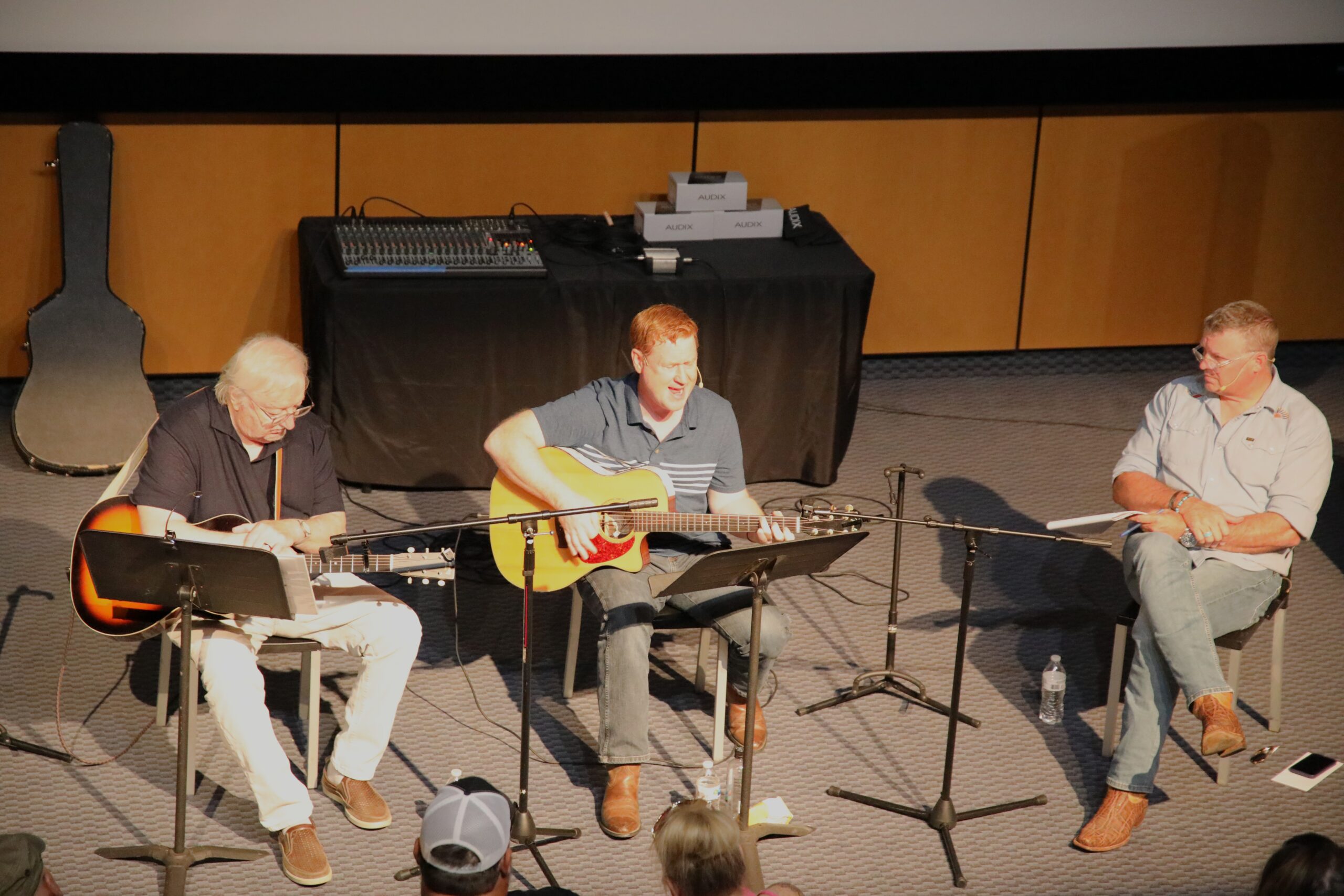
Presented by the Booth Writers Guild, the Distinguished Songwriter Series is a quarterly program hosted by singer-songwriter Scott Thompson that brings top Nashville songwriters to talk about their writing process, current projects and will also sing a few of their songs. Adam Wheeler has written for top singers such as Scotty McCreery and Clay Walker. Pat Alger has written many top country favorites such as “Small Town Saturday Night.”

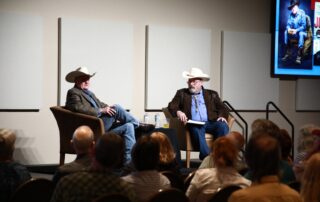
Conversation and Book Signing with author of Longmire – Craig Johnson 

Tuesday, June 4, 5:00 – 8:00 PM
Ballroom

Craig Johnson is the New York Times bestselling author of the Longmire mysteries, the basis for the hit Netflix original series Longmire. He lives in Ucross, Wyoming, population twenty-six. Don’t miss this chance to meet Craig and be some of the first to receive his newest book FIRST FROST available for purchase!

Art for Lunch: Allatoona and Monticello Dam

4.03.2024, 12:15 PM EDT

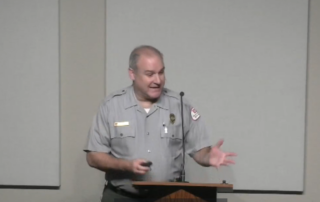
Georgia’s Allatoona Dam (1949) and California’s Monticello Dam (1957) are two of the many dams completed by the US Army Corps of Engineers. In the 1960 visual essay Death of a Valley, photographers Dorothea Lange and Pirkle Jones documented Monticello Dam’s construction and how it marked the end of Berryessa Valley. According to Lange and Jones, this resulted from America’s increasing water needs. Completed years before, Allatoona Dam was a precursor to Monticello in its design and construction. Today, both dams symbolize the ongoing need for fresh water. Christopher Purvis, the US Army Corp of Engineers Lead Ranger at Allatoona Lake, will present the origins and history of Allatoona Dam and how it compares to its western counterpart, Monticello Dam.

Go to Top