
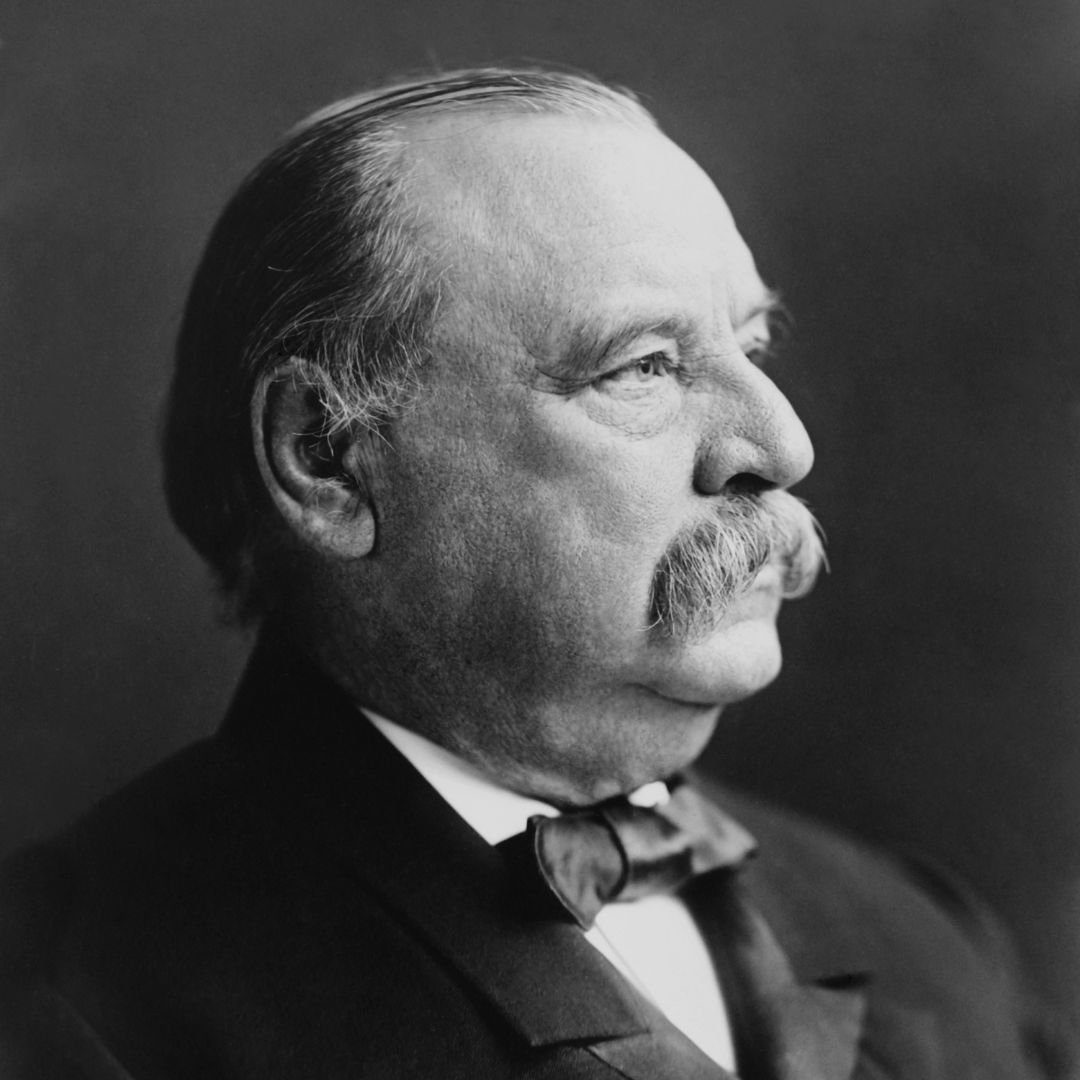
What happens to U.S. presidents after they serve in office? Let’s take a closer look at this rarified atmosphere – ‘the most exclusive club in the world’ – one that has shown to be as varied as the 45 men who have been members.
Faced with the immense stress of being president, most former presidents want peace, tranquility, and little more. Not counting the 8 Presidents who died in office, most retired to their home states to write their memoirs and stay out of the spotlight.
However, a few of our ex-Presidents tried to jump right back into the oval office. Some have been elected to Congress or served on the Supreme Court. Some have pursued humanitarian causes, while some suffered personal tragedy and poverty.
Uniquely, William Howard Taft became Chief Justice of the Supreme Court in 1921, serving until his death in 1931. He arguably accomplished more in his 9 years as Chief Justice than his four years as President, (an office his ambitious wife Nellie desired but he never did himself). It was Taft who persuaded Congress to fund the construction of the recognizable Supreme Court building in Washington, finally moving The Court out of the basement of the Capitol.
Millard Fillmore’s wife died only three weeks after he left office, and his daughter died 15 months later. Despite such personal tragedy, he unsuccessfully ran for President again for the Know Nothing party, remarried a wealthy widow and became a philanthropist.
And then we come to Grover Cleveland, the only President elected to two non-consecutive terms. Defeated as an incumbent in 1888, his wife Frances said to the White House staff “keep everything in good order until we move back here in 4 years.” And so, it was. In 1892, Cleveland defeated incumbent Benjamin Harrison, reclaiming the levers of power.
John Quincy Adams ran for Congress after he left office and served 12 years, staunchly advocating for abolition of slavery. Known as Old Man Eloquent, he suffered a massive stroke at his desk on the floor of Congress and died in days. Andrew Johnson, our impeached 17th President, was briefly Senator from Tennessee, serving 6 months before his death. And the 10th President, John Tyler, a life-long contrarian, was elected to the Congress of the Confederacy in 1861.
Prior to 1958, ex-Presidents received no pension, forcing them to fend for themselves to pay the bills. This situation led to financial problems for several. Sadly, James Monroe died in poverty, partly due to the large, unreimbursed personal costs of serving our country for decades. Thomas Jefferson was ‘land rich and cash poor’, so he was forced to sell his 6,400-volume book collection to the Library of Congress for $23,950 to generate some cash.
U.S. Grant was nearly bankrupt and diagnosed with cancer. He worried about how his family would survive without financial support. Mark Twain, in his role as a publishing entrepreneur, approached the ex-president and offered to publish his memoirs for a handsome fee. Grant wrote a highly cogent, successful book, finishing it just days before his death from throat cancer.
In fear of his past coming to light after his death, in 1886 Chester Arthur ordered his staff to burn all his papers just before he died of kidney disease 1.5 years after leaving office. This is one reason we know so little about him, and the justifiable suspicion is that some of his notorious pre-presidency activities went up in flames.
Living here in Georgia, we’ve seen up close the lengthiest post presidency in history: Jimmy Carter’s 43 years out of office is roughly three times the average. Mr. Carter created the Carter Center to address humanitarian causes, supervise democratic elections around the world, and build houses for Habitat for Humanity. He won the Nobel Peace Prize in 2002, over two decades after leaving office. And he’s not done yet!
In modern days, most ex-Presidents are busy raising money for their libraries, giving speeches for a fee, and writing their memoirs for multi-million-dollar publishing deals. Who could blame them when the retirement benefit for former Presidents was only recently raised from $96,000 per year to $219,200?
However, it’s not just about the money. Several of the most recent members of the ‘most exclusive club in the world’ such as George H.W. Bush and Bill Clinton, have joined forces to assist in earthquake and hurricane relief efforts around the world, raising money and awareness as few others could.
Donald Trump has plunged back into national politics, earning the Republican nomination in 2024 in his effort to join Grover Cleveland as the non-consecutive presidents.
Interested in learning more about the presidents? Visit the Carolyn & James Millar Presidential Gallery on the upper level of the Booth Western Art Museum. The gallery features original letters and photographs of every U.S. president. Learn more at www.boothmuseum.org.